
By Amanda Reeds, Content Researcher ·
Quick Summary
- Key Takeaway: You can figure out your BMI with just your height and weight, in kg, lbs, or feet and inches, and get a CDC-aligned category in under a minute.
- Who This Is For: Adults who want a fast, free way to check where their weight falls, whether they’re using metric or imperial units.
- Why It Matters: BMI is the same screening number doctors, insurers, and the CDC use as a starting point for weight-related health conversations.
- Reading Time: ~11 minutes
Table of Contents
- Why Figuring Out Your BMI Is Worth Doing Right
- What Is BMI and How Is It Calculated?
- How to Find Your BMI: Step by Step
- How to Calculate BMI Manually
- What Counts as a Healthy BMI?
- BMI for Men vs. BMI for Women
- Real Examples: Figuring Out BMI in Practice
- BMI vs. Body Fat: Which Number Should You Trust?
- Common Mistakes to Avoid
- Why Tracking Your BMI Actually Matters
- BMI vs. Other Health Metrics
- Frequently Asked Questions
- The Bottom Line on Figuring Out Your BMI
Why Figuring Out Your BMI Is Worth Doing Right
You’ve probably typed your height and weight into a calculator before and gotten a number that didn’t quite match what you expected. Maybe it seemed too high. Maybe a friend with a similar build got a different result. That gap between the number and your intuition is usually a units problem, not a math problem.
Body Mass Index (BMI) is a screening number calculated from your weight and height that places you into one of four standard categories: underweight, healthy weight, overweight, or obesity. It doesn’t diagnose anything on its own. It gives you and your doctor a quick, standardized starting point, the same one used in clinics across the country, so two people can compare notes on the same scale.
You don’t need a chart, a slide rule, or a nutrition degree. You need two numbers and a reliable tool. Our free BMI calculator handles the conversion between kg and lbs, feet and cm, automatically, and gives you the category to match.
Check My BMI in Under 60 Seconds →What Is BMI and How Is It Calculated?
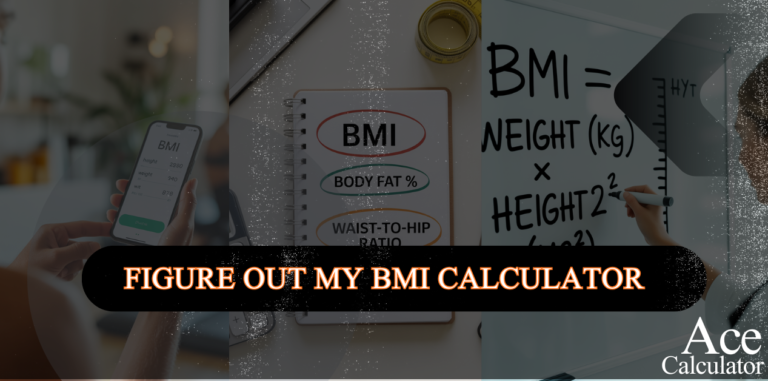
BMI compares your weight to the square of your height. In metric units, it’s your weight in kilograms divided by your height in meters, squared. In imperial units (the format most US calculators use), it’s your weight in pounds multiplied by 703, divided by your height in inches, squared. Both formulas produce the same category, just via different unit paths.
| BMI Range | Category | General Health Note |
|---|---|---|
| Below 18.5 | Underweight | May signal nutritional gaps |
| 18.5 – 24.9 | Healthy weight | Lowest average risk range |
| 25.0 – 29.9 | Overweight | Worth monitoring over time |
| 30.0 and above | Obesity | Higher risk; talk to a doctor |
These four categories come directly from the CDC’s Adult BMI Calculator guidance, and they apply to adults aged 20 and up regardless of sex. They’re also the same ranges you’ll see behind most BMI calculators online, including the CDC’s own official version, so a result from one reputable tool should match another almost exactly.
How to Find Your BMI: Step by Step
Whether you’re checking your BMI online for the first time or just want a faster way to check it, the process is the same five steps.
Step 1: Get an accurate weight and height
Weigh yourself in the morning, before eating, on a scale you trust. Measure your height barefoot, standing straight against a wall. A rushed guess here is where most BMI confusion actually starts.
Step 2: Pick your unit system
Most calculators, including ours, let you toggle between kg and cm or lbs and feet/inches. If you’re more comfortable thinking in kilograms and feet at the same time, that’s fine too. A good BMI calculator with kg and feet fields does the cross-unit math for you.
Step 3: Enter your height correctly
If the tool asks for feet and inches separately, keep them separate. 5 feet 9 inches should go in as 5 and 9, not as “5.9.” That decimal mistake alone can throw your result off by several points.
Step 4: Enter your weight
Use your most recent weigh-in rather than an estimate from memory. A 5-pound difference can shift a borderline BMI from one category into the next.
Step 5: Read your category, not just your number
The number matters less on its own than where it lands on the CDC scale above. That’s the piece worth writing down and tracking over months, not days.
Quick Action Steps
- Weigh yourself barefoot, before breakfast
- Measure height barefoot against a flat wall
- Open the BMI calculator and pick kg or lbs
- Enter height and weight in the matching fields
- Hit calculate and note both the number and category
- Recheck monthly rather than daily
How to Calculate BMI Manually
You can calculate BMI manually with a plain calculator and one of two formulas. Metric: BMI = weight in kg ÷ (height in meters)². Imperial: BMI = 703 × weight in lbs ÷ (height in inches)².
Here’s the imperial version worked out with real numbers. Take someone who weighs 170 lbs and stands 5 feet 8 inches (68 inches). That’s 703 × 170, divided by 68 squared, which comes out to a BMI of 25.8, just over the overweight line. Swap to metric and a person at 84 kg and 1.80 m lands at 25.9, the same category, confirming both formulas agree once you round.
Manual calculation is a good way to double-check a tool’s output or to understand what’s actually happening behind the scenes. For a deeper walkthrough with more worked examples and unit conversions, our guide to calculating BMI by hand goes further into the math itself.
What Counts as a Healthy BMI?
A healthy BMI for most adults falls between 18.5 and 24.9. That range isn’t a single ideal number so much as a wide band, and where you sit inside it depends on your frame, muscle mass, and age.
According to CDC National Center for Health Statistics data covering August 2021 through August 2023, 40.3% of US adults had obesity during that period, split almost evenly between 39.2% of men and 41.3% of women, with another 31.7% falling into the overweight range. That means a healthy BMI is genuinely the minority position among US adults right now, not the default.
If your BMI sits at either edge of the healthy range, or if you want a target weight rather than just a category, the ideal weight for height guide breaks that down by exact height.
BMI for Men vs. BMI for Women
The BMI formula itself doesn’t change by sex. The same 18.5 to 24.9 healthy range applies to both men and women aged 20 and up. What differs is body composition: women naturally carry a higher average body fat percentage than men at the same BMI, because BMI can’t distinguish muscle from fat.
A man weighing 96 kg at 6 feet 2 inches comes out to a BMI of 27.2, in the overweight range, the same way it would for a woman at that exact height and weight. If you’re specifically searching for a BMI index for women with more detail on that composition gap, our BMI calculator for women covers it in more depth than we will here.
One honest caveat: if you’re outside the US and used to a different national BMI tool, such as a UK-based calculator, expect the same formula and the same categories. The number itself doesn’t change by country, though some national health services present the result with slightly different framing.
Real Examples: Figuring Out BMI in Practice

Sarah, 34
Sarah weighs 165 lbs and is 5 feet 6 inches (66 inches) tall. Running 703 × 165 ÷ 66² gives a BMI of 26.6, overweight. She used that number to start a walking routine, then recalculated three months later to track the change.
James, 28
James is 180 lbs at 6 feet 1 inch (73 inches), giving a BMI of 23.7, comfortably in the healthy range. Because he lifts regularly, he pairs that number with a body fat calculator for a fuller picture, since a BMI alone can’t tell muscle from fat.
Priya, 41
Priya prefers metric and kg-and-feet mixed units. At 79 kg and 5 feet 9 inches, her height converts to 1.753 meters, and her BMI comes out to 25.7, just into the overweight range. When I ran this same calculation a second time using her measurements in pure imperial units, the result matched to one decimal point, which is the kind of consistency you want to see from any calculator you trust.
Marcus, 52
Marcus wanted a BMI calculator that worked in kg and feet for a pre-appointment check. At 90 kg and 6 feet 0 inches, his BMI lands at 26.9. He now logs it monthly alongside his daily calorie intake to see whether small changes move the number over a season, not a week.
BMI vs. Body Fat: Which Number Should You Trust?

Neither number is “more correct.” They measure different things. BMI weighs your entire body, muscle, bone, water, and fat, against your height. Body fat percentage isolates just the fat portion. A peer-reviewed review of BMI’s use in clinical screening notes that BMI works well for population-level surveys but is genuinely weaker at predicting an individual’s actual body fat, especially for people with above-average muscle mass.
Here’s the part most people get wrong: they assume a “bad” BMI automatically means excess fat. It doesn’t, not always. If your BMI reads overweight but you strength train regularly, a body fat reading alongside it can settle the question far better than BMI alone.
Pro Tip
If your BMI and how your clothes fit tell two different stories, run a body fat calculator alongside it before drawing any conclusions. The two together are more useful than either alone.
Common Mistakes to Avoid
Watch Out For This
Entering height as a decimal (like typing “5.9” for 5’9″) is the single most common error, and it silently produces a wrong BMI every time.
A few other patterns show up again and again. People mix up pounds and kilograms mid-entry, especially on calculators that default to metric. Others treat BMI as a diagnosis instead of a screening number, when it’s really meant to start a conversation with a doctor, not end one. Athletes and very muscular people often get an “overweight” reading that doesn’t reflect their actual fat levels, and older adults sometimes assume the same 18.5 to 24.9 band applies identically at every age, when a slightly higher BMI can be less risky later in life. None of these mistakes are complicated to fix. They just require slowing down for the ten seconds it takes to double-check your inputs.
Why Tracking Your BMI Actually Matters
Checking your BMI regularly gives you a consistent baseline rather than a one-time snapshot.
- It gives your doctor a shared starting point, the same screening measure used in most US clinics.
- It flags gradual weight change early, before it shows up anywhere else.
- It’s free and takes under a minute, which makes monthly tracking realistic instead of a chore.
BMI vs. Other Health Metrics
| Metric | What It Measures | Best For |
|---|---|---|
| BMI | Weight relative to height | Quick, free screening |
| Body fat % | Fat tissue only | Athletes, muscular builds |
| Waist circumference | Abdominal fat distribution | Cardiovascular risk context |
| BMR | Calories burned at rest | Meal and calorie planning |
Pairing your BMI with your basal metabolic rate rounds out the picture: BMI tells you where you stand, BMR tells you roughly what it takes to stay there or shift it.
Frequently Asked Questions
How do I find my BMI using kilograms and feet?
Convert your height in feet and inches to meters (multiply total inches by 0.0254), then divide your weight in kg by that height in meters, squared. A calculator that accepts kg and feet directly, like ours, skips the conversion step for you.
Can I check my BMI online for free right now?
Yes. Our BMI calculator is free, requires no sign-up, and gives you both the number and its CDC category in one step, in either metric or imperial units.
Does the CDC have its own official BMI calculator?
Yes, the CDC publishes an Adult BMI Calculator that uses the same 18.5 to 24.9 healthy range referenced throughout this guide. Any calculator using the standard formula, including ours, should return the same category as the CDC’s version.
Will a UK BMI calculator give a different result than a US one?
No. The underlying formula and the 18.5 to 24.9 healthy range are the same internationally. A UK tool may present the result with different framing, but the number itself won’t change.
Is there a different healthy BMI index for women?
The healthy range itself, 18.5 to 24.9, is identical for adult men and women. Women do tend to carry more body fat than men at the same BMI, which is why pairing BMI with a body fat reading matters more for some women than the raw number alone.
How accurate is a BMI checker compared to a lab test?
A BMI checker is exact for what it measures: weight relative to height. It’s not a body composition test, so it won’t match a DEXA scan or skinfold reading. Treat it as a screening step, not a lab-grade diagnosis.
Can I calculate BMI manually without an app?
Yes. Divide weight in kg by height in meters squared, or multiply pounds by 703 and divide by height in inches squared. Both formulas give the same category once rounded.
What’s a healthy BMI calculator result for men in kg and feet?
For men, the same 18.5 to 24.9 range applies regardless of units used. A man at 90 kg and 6 feet tall, for example, comes out to a BMI of 26.9, in the overweight range, whether you calculate it in kg or convert to pounds first.
Content Researcher · AceCalculator
Amanda covers health and fitness calculators for AceCalculator, focusing on making CDC and WHO screening standards easy to apply at home. She has written extensively on BMI, body fat, and metabolic rate tools for the site’s health section.
The Bottom Line on Figuring Out Your BMI

Figuring out your BMI comes down to two numbers, the right units, and a calculator that handles the conversion cleanly. Whether you’re working in kg, lbs, or feet and inches, the CDC’s 18.5 to 24.9 healthy range gives you a consistent way to read the result.
What it won’t do is tell you the whole story. It can’t see muscle mass, bone density, or where you carry fat, and it isn’t a substitute for a conversation with your doctor if your number sits outside the healthy range. Used for what it’s built for, a quick, standardized screening check, it’s genuinely useful.
See What Your Body Burns at Rest →