
By Amanda Reeds, Content Researcher ·
Quick Summary
- Key Takeaway: The surface area of a cube is 6a², where a is the edge length, and every one of the six faces contributes an equal square of area.
- Who This Is For: Students checking homework, shipping and packaging planners, and anyone who only has a volume or diagonal measurement and needs the surface area.
- Why It Matters: Getting this formula wrong is one of the most common geometry mistakes, usually because people confuse it with volume or with a cuboid’s formula.
- Reading Time: ~9 minutes
Why Surface Area of a Cube Is Worth Getting Right
You’ve probably measured one side of a box and gotten an answer that didn’t match the packaging label. That gap usually comes from one small mix-up. You multiply the wrong number of faces, or reach for the volume formula when you needed area.
The surface area of a cube is the total area covering all six of its square faces. You find it with the formula 6a², where a is the length of one edge. This number tells you how much material it takes to wrap, paint, or laminate every outer surface of the cube. It’s different from volume, which measures the space inside rather than the skin around it.
A cube is a three-dimensional solid with six identical square faces, twelve equal edges, and eight vertices. Anyone working with packaging, storage, 3D printing, or basic geometry homework runs into this calculation sooner or later.
Already have your edge length and just want the number? Our volume calculator includes a built-in cube volume tool that pairs naturally with the surface area formula below.
Table of Contents
- What Is the Surface Area of a Cube?
- How to Calculate It Step by Step
- Finding Surface Area When You Only Know the Volume
- Finding Surface Area Using the Diagonal
- Cube vs. Cuboid: Why the Formula Changes
- Real-World Examples
- Common Mistakes to Watch For
- Why This Calculation Actually Matters
- Frequently Asked Questions
What Is the Surface Area of a Cube?
Surface area of a cube is the sum of the areas of all six square faces. You calculate it with the formula 6a², where a stands for the edge length. Each face is a square with area a². Since a cube has exactly six matching faces, you multiply that single face area by six to get the total.
According to the National Institute of Standards and Technology, the standard unit for any area measurement is the square meter (m²) in the metric system. Square feet, inches, and centimeters are common too. NIST’s guide to SI area units notes that every unit of length has a matching unit of area. Your edge length unit determines your surface area unit automatically.
Here’s the part most people get wrong: surface area and volume sound like they should scale the same way, but they don’t. Volume grows with the cube of the edge length, while surface area only grows with the square of it. Double the edge length and volume grows eightfold, but surface area only grows fourfold.
For other geometry tools, AceCalculator’s math calculators page has a scientific calculator and several other formula-based tools worth bookmarking.

Measuring one edge is the only input the formula needs.
How to Calculate Surface Area of a Cube Step by Step
To find the surface area of a cube, you square the edge length and multiply by six. That holds whether you call it the edge, the side length, or just “one side” of the cube.
- Measure one edge of the cube accurately. Since all edges are equal, you only need one measurement.
- Square that number (multiply it by itself). This gives you the area of a single face.
- Multiply the result by 6, since a cube has six identical faces.
- Attach the correct squared unit to your answer, such as cm², ft², or in².
Quick Action Steps
- Edge = 4.5 ft → square it: 4.5 × 4.5 = 20.25 sq ft
- Multiply by 6: 20.25 × 6 = 121.5 sq ft total surface area
- Double-check units match your original measurement
Try it with a smaller object. A storage cube with a 12 cm edge gives you 12² = 144, and 144 × 6 = 864 cm² of total surface area. That’s roughly the size of two sheets of A4 paper laid flat.
If your measurements come in mixed units, convert the edge length first before squaring it. AceCalculator’s conversion calculator handles length conversions like inches to centimeters in one step. That keeps you from making a unit error partway through.

Working the formula by hand once makes it much easier to sanity-check a calculator’s output later.
How to Find Surface Area of a Cube When You Only Know the Volume
If you know the volume of a cube, first find the edge length by taking the cube root of the volume. Then plug that edge length into the standard 6a² formula. You cannot go directly from volume to surface area in one step, because the two measurements don’t share a simple multiplier.
Say you have a shipping box with a volume of 125 cubic inches. The cube root of 125 is 5, since 5 × 5 × 5 = 125, giving an edge length of 5 inches. Square that: 5² = 25. Multiply by 6: 25 × 6 = 150 square inches of total surface area.
A smaller example makes the pattern clearer. A cube with a volume of 64 cm³ has an edge length of 4 cm, since 4³ = 64. Squaring 4 gives 16, and 16 × 6 = 96 cm². The volume and surface area numbers aren’t proportional at all. That trips up people who assume a bigger volume automatically means a proportionally bigger surface area.
Sometimes your answer needs to land in a different area unit for a spec sheet. AceCalculator’s square meter to square feet conversion guide walks through the exact multipliers.
How to Find Surface Area of a Cube Using the Diagonal
To find surface area from a cube’s space diagonal, divide the diagonal by the square root of 3 to get the edge length. Then apply the 6a² formula as usual. The space diagonal is the line running from one corner of the cube through the interior to the opposite corner. It’s related to the edge length by the formula d = a√3.
Suppose a cube has a measured space diagonal of 10.39 cm. Dividing by √3 (about 1.732) gives an edge length of roughly 6 cm. Squaring that gives 36, and multiplying by 6 gives 216 cm² of surface area. This method comes up most in engineering and 3D design work. The diagonal is sometimes easier to measure than a single edge on a physical object with rounded corners.
Surface Area of a Cube vs. a Cuboid (Rectangular Prism)
A cube uses one formula, 6a², because all six faces are identical squares. A cuboid, also called a rectangular prism, uses 2(lw + lh + wh), because its three pairs of faces can each have different dimensions. If you’ve searched “surface area of cube prism” and gotten confused, this is likely the mix-up. A cube is technically a special type of rectangular prism where every side happens to be equal.
Here’s a fact that catches people by surprise: for a fixed volume, a cube always has the smallest possible surface area of any rectangular box. A cube with edge 6 cm has a volume of 216 cm³ and a surface area of 216 cm². A cuboid with that same 216 cm³ volume, but dimensions of 12 × 6 × 3 cm, has a surface area of 252 cm². That’s noticeably higher despite identical volume. That’s part of why shipping companies favor cube-shaped packaging when they can, since it means less cardboard per unit of space.
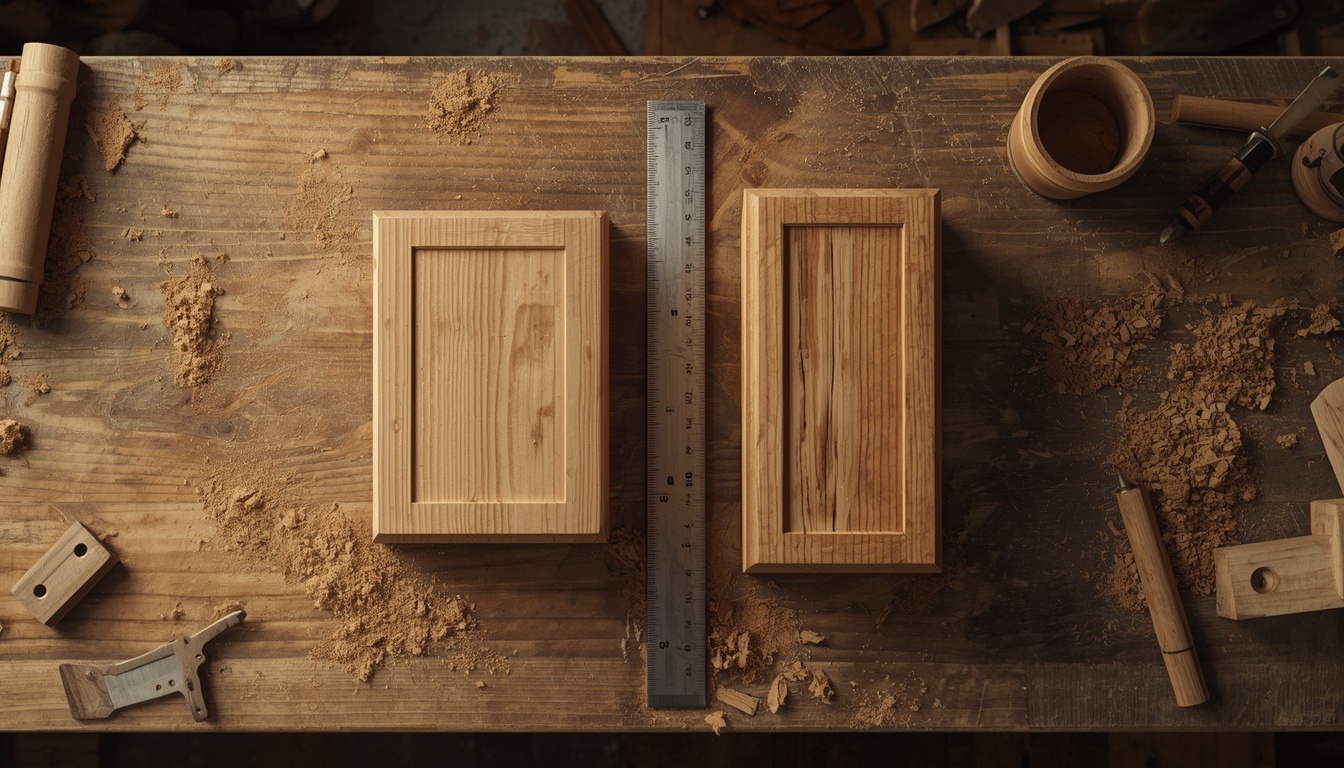
Same family of shape, two different formulas depending on whether the sides match.
| Factor | Cube | Cuboid (Rectangular Prism) |
|---|---|---|
| Surface Area Formula | 6a² | 2(lw + lh + wh) |
| Required Measurements | 1 (edge length) | 3 (length, width, height) |
| Face Shapes | 6 identical squares | 3 pairs of matching rectangles |
| Example (216 cm³ volume) | 216 cm² surface area | 252 cm² surface area (12×6×3) |
💡 Pro Tip
Before you plug numbers into any formula, glance at the object. If all three dimensions look equal, use 6a². If they don’t, you need the cuboid formula and all three measurements, not just one.
Real-World Examples
Maria, a warehouse coordinator in Ohio, needed shrink wrap for cube-shaped storage bins with an 18-inch edge. Squaring 18 gives 324, and multiplying by 6 gives 1,944 square inches per bin, or 13.5 square feet at her supplier’s pricing. That exact figure kept her from over-ordering wrap based on a rough guess.
Daniel, a hobbyist woodworker, was building a cube-shaped planter box. He only had the volume from his design software: 512 cubic inches. The cube root gave him an edge length of 8 inches. Squaring that gives 64, and multiplying by 6 gives 384 square inches. That told him how much sealant to buy before he started sanding.
Common Mistakes to Watch For
Forgetting to multiply by 6. People calculate a² correctly, get the area of one face, and stop there. That number only represents one-sixth of the total.
Confusing surface area with volume. Volume uses a³, while surface area uses a² times six. Mixing these up gives a much larger, and wrong, number.
Skipping the cube root step when starting from volume. You cannot cube-root the volume and multiply by 6 without squaring first. The edge length comes from the cube root, and then it needs squaring again before the ×6 step.
Mixing units mid-calculation. Measuring one edge in inches and treating another “equal” edge as centimeters produces a nonsensical result. If a calculation looks off, AceCalculator’s math solver guide can help you check your work.
⚠ Watch Out For This
Applying the cube’s 6a² formula to a rectangular prism that only looks roughly cube-shaped will give you the wrong answer. Measure all three dimensions before assuming a box qualifies as a true cube.
Why This Calculation Actually Matters
Surface area drives real costs, not just homework grades. According to NIST’s guide to circumference, area, and volume calculations, area measurements directly determine how much paint, carpet, or material a project requires.
- Packaging teams use it to calculate how much cardboard or shrink wrap a box design needs, which affects material cost per unit.
- 3D printing hobbyists use it to estimate paint or resin coating before starting a print job.
- Students and engineers use it as a foundation for the cylinder, cone, and sphere formulas that come next.

Surface area calculations show up constantly in packaging and storage logistics.
Frequently Asked Questions About Surface Area of a Cube
What is the formula for the surface area of a cube?
The formula is 6a², where a is the edge length of the cube. You square the edge length to find the area of one face. Then multiply by six, because a cube has six identical square faces.
How do you find the surface area of a cube if you only know the volume?
Take the cube root of the volume to get the edge length, then apply the standard 6a² formula. For example, a volume of 125 in³ gives an edge length of 5 in, and 6 × 5² equals 150 square inches of surface area.
What is the difference between surface area and volume of a cube?
Surface area measures the total area of the six outer faces, using a². Volume measures the space enclosed inside the cube, using a³. They use different exponents, so they never scale at the same rate as the edge length changes.
Can you find the surface area of a cube using the diagonal?
Yes. Divide the space diagonal by the square root of 3 to recover the edge length. Then square that result and multiply by six. A diagonal of about 10.39 cm corresponds to an edge length of 6 cm and a surface area of 216 cm².
How is the surface area of a cube different from a cuboid or rectangular prism?
A cube uses 6a², because all faces are equal squares. A cuboid uses 2(lw + lh + wh), because its three pairs of faces can differ in size. A cube is technically a special case of a rectangular prism where every edge happens to match.
What units should you use for surface area of a cube?
Surface area is always reported in squared length units, such as cm², in², ft², or m², matching whatever unit you used for the edge length. The NIST notes the square meter as the standard SI unit for any area measurement.
Why does a cube have the smallest surface area for its volume compared to other rectangular boxes?
A cube distributes its dimensions evenly, minimizing the total outer area needed to enclose a given volume. A cuboid with the same volume but uneven side lengths always ends up with a larger surface area.
How many faces does a cube have and why does that matter for surface area?
A cube has six faces, which is exactly why the formula multiplies the area of one face by six. Miscounting the faces is a common reason people get the wrong answer.
Is surface area of a cube the same as total surface area?
Yes, for a cube these terms mean the same thing, since every face is an outer face with nothing hidden or internal. Total surface area only differs from surface area for shapes with separate curved and flat sections, like a cylinder.
How do you convert cube surface area from square centimeters to square feet?
Divide the square centimeter value by 929.03, since one square foot equals about 929.03 cm². A surface area of 864 cm², for example, works out to roughly 0.93 square feet.
Content Researcher · AceCalculator
Amanda Reeds researches and writes AceCalculator’s math and measurement guides, focusing on geometry, unit conversion, and everyday calculation problems. She has covered formula-based topics ranging from square footage to volume calculations, verifying every worked example with independent computation before publication.
The Bottom Line on Surface Area of a Cube
Surface area of a cube always comes back to the same formula: 6a². Whether you start with an edge length, a volume, or a diagonal, the goal is the same. Get to the edge length first, then square it and multiply by six.
What this formula won’t do is tell you anything about strength, weight, or material cost per square inch. It only measures area, so treat the number as one input among several rather than a complete answer on its own.
See Where My Area Numbers Actually Stand →