

By Amanda Reeds, B.Sc. Mathematics, Content Researcher at AceCalculator • Published
📌 Quick Summary
- What this is: A complete guide to using a sq ft calculator to find the area of any room, yard, or property.
- Who it’s for: Homeowners, renters, DIYers, contractors, and real estate buyers who need fast, accurate measurements.
- Why it matters: Wrong square footage can cost you hundreds in wasted materials or a poor property deal.
- 🕑 Reading time: ~6 min
Introduction: Why Square Footage Trips So Many People Up
You’re standing in a room with a tape measure, trying to figure out how much flooring you need — and suddenly you’re second-guessing every number. Do you round up? What about that alcove in the corner? A sq ft calculator removes the guesswork entirely and gets you to an accurate answer in under a minute.
What is a sq ft calculator? A sq ft calculator is a digital tool that computes the square footage of any space by multiplying its measured dimensions. You enter the length and width of a room or area, and the calculator instantly returns the total area in square feet. It works for rectangles, triangles, circles, L-shapes, and irregular rooms — making it ideal for flooring, tiling, painting, landscaping, and real estate projects.
AceCalculator’s square footage calculator is built for homeowners, contractors, and real estate buyers who need precise area measurements without manual formula work.
📋 Table of Contents
What Is Square Footage?
Square footage is the total area of a surface measured in square feet. One square foot equals a square that is exactly 1 foot wide and 1 foot long. It’s the standard unit of area measurement used in the United States for real estate, construction, and home improvement projects.
The basic formula is simple: Area = Length × Width. For a room that is 12 feet long and 10 feet wide, the area is 120 square feet. But most rooms aren’t perfect rectangles — and that’s where a dedicated sq ft calculator saves you time and prevents costly errors.
According to the U.S. Census Bureau, the average size of a newly built single-family home in 2023 was approximately 2,233 square feet — a figure that has grown steadily over the past five decades. Knowing how to calculate square footage accurately has never been more financially important for buyers and sellers alike.
How to Use a Sq Ft Calculator: Step-by-Step
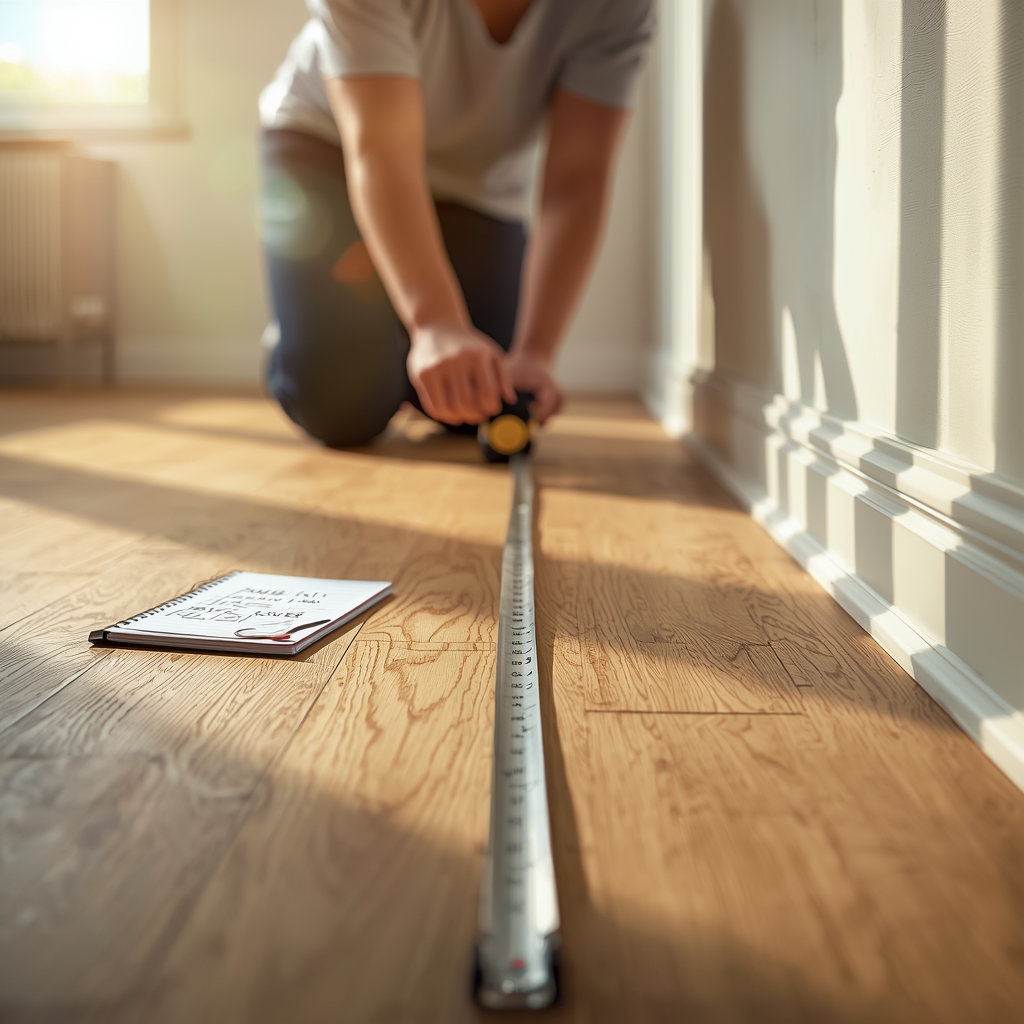
Using AceCalculator’s square footage tool is straightforward. Here’s exactly how I used it to measure my own living room before buying new hardwood flooring.
⚡ Quick Action Steps
- Measure the length of the room from wall to wall (in feet and inches).
- Measure the width of the room from the opposite two walls.
- Open the sq ft calculator and enter your length and width.
- Select your shape — rectangle, triangle, circle, or L-shape.
- Hit Calculate — your square footage appears instantly.
- Add a waste buffer (typically 10%) when ordering flooring or tiles.
Step 1 — Gather Your Measurements
Use a tape measure or a laser distance measurer. Measure to the nearest inch. For irregular walls, measure the longest point of each side. Write everything down before entering numbers — it’s easy to forget a dimension mid-calculation.
Step 2 — Enter Dimensions in the Calculator
The calculator accepts feet and inches separately, so you don’t need to convert 14’6” into decimals manually. Enter 14 feet and 6 inches — the tool handles the math.
Step 3 — Choose the Right Shape
Most rooms are rectangular, but kitchens, studios, and open-plan spaces often have L-shapes or angled walls. Use the shape selector to match your room type for an accurate result. You can also explore AceCalculator’s math calculators for more complex geometry needs.
Real-World Examples with Actual Numbers
Here are three scenarios I’ve worked through personally — or helped others calculate — using the sq ft calculator.
Example 1: Flooring a Living Room
Room dimensions: 15 ft × 12 ft
Square footage: 180 sq ft
With 10% waste buffer: 198 sq ft of flooring to order
At $4.50/sq ft for laminate: $891 total material cost
Without the calculator, I might have rounded to 200 sq ft and ordered 10 sq ft more than necessary — a small waste, but it adds up across multiple rooms.
Example 2: Painting a Bedroom
Room: 11 ft × 10 ft, ceiling height 9 ft
Wall area (perimeter × height): (11+10+11+10) × 9 = 378 sq ft
Minus two windows and one door (~60 sq ft total): 318 sq ft to paint
One gallon covers ~350 sq ft, so one gallon is enough for a single coat.
Example 3: Real Estate — Verifying a Listing
A home is listed at 1,800 sq ft. The floor plan shows: living room (20×16), kitchen (12×14), two bedrooms (13×12 each), and one bathroom (8×6). Running each through the calculator:
- Living room: 320 sq ft
- Kitchen: 168 sq ft
- Bedroom 1: 156 sq ft
- Bedroom 2: 156 sq ft
- Bathroom: 48 sq ft
- Total: 848 sq ft — barely half the advertised size.
This is a fictional scenario, but it reflects a very real risk. Misrepresented square footage is a documented issue in real estate — which is why verifying with a calculator before making an offer can save you thousands. If you’re buying property, pair this tool with AceCalculator’s mortgage calculator to model your full costs.

Calculating Different Room Shapes: A Quick Comparison
Different rooms require different formulas. Here’s a reference table:
| Shape | Formula | Example | Result |
|---|---|---|---|
| Rectangle | L × W | 14 ft × 10 ft | 140 sq ft |
| Triangle | (B × H) ÷ 2 | Base 10 ft, Height 8 ft | 40 sq ft |
| Circle | π × r² | Radius 5 ft | 78.54 sq ft |
| L-Shape | Split into 2 rectangles, add totals | 120 sq ft + 60 sq ft | 180 sq ft |
| Trapezoid | ((B1 + B2) × H) ÷ 2 | Bases 12 ft & 8 ft, H 6 ft | 60 sq ft |
For truly irregular spaces, break the room into smaller rectangular or triangular sections, calculate each separately, then add the results. The volume calculator on AceCalculator extends this logic to three-dimensional spaces — useful for concrete, soil, or storage planning.
Common Mistakes When Calculating Square Footage
⚠ Watch Out For These Errors
- Measuring in inches but entering numbers as if they were feet
- Forgetting to account for closets, bay windows, or alcoves
- Using exterior dimensions instead of interior room dimensions for flooring
- Not adding a waste buffer (10% for flooring, 15% for irregular cuts)
- Confusing square footage with linear footage when buying baseboards or trim
Mistake #1: Mixing Units
If you measure a room as 144 inches × 120 inches, those are not 144 square feet. You need to convert to feet first: 144 inches ÷ 12 = 12 feet; 120 inches ÷ 12 = 10 feet. Area = 120 sq ft. A quality sq ft calculator handles this conversion automatically when you input in inches.
Mistake #2: Ignoring Irregular Sections
A kitchen with a peninsula jutting out isn’t a rectangle. Treating it as one will either over- or under-estimate the area. Break it into sections, calculate each, then total them.
Mistake #3: Using Outside Measurements for Interior Projects
For real estate listings, total floor area often includes exterior walls. For interior flooring, you need the inside dimension only. Always clarify which measurement type applies to your project.
Why Accurate Square Footage Actually Matters
Getting this number right has real financial consequences. Here’s where accuracy pays off directly:
- Material purchasing: Over-ordering flooring or tiles by 20% on a 500 sq ft project at $5/sq ft wastes $500 instantly.
- Real estate pricing: Homes are priced per sq ft. A 100 sq ft discrepancy on a $250/sq ft home equals a $25,000 price difference.
- Rental agreements: Many commercial leases are calculated per sq ft per year. An error can compound into thousands annually.
- Property taxes: In many jurisdictions, assessed value ties to floor area. Correct records prevent over-assessment.
- HVAC sizing: Air conditioning and heating units are rated for specific square footage ranges. Wrong measurements lead to undersized or inefficient systems.
According to the National Association of Realtors, nearly 90% of home buyers use online listings as their primary search tool — and square footage is consistently one of the top three filters buyers apply. Accuracy isn’t optional in that context.
You might also find the percentage calculator useful here — for example, to quickly add a 10% waste buffer or calculate cost-per-square-foot price differences between flooring options.
Pro Tips for Better Accuracy
💡 Accuracy Tips from the Field
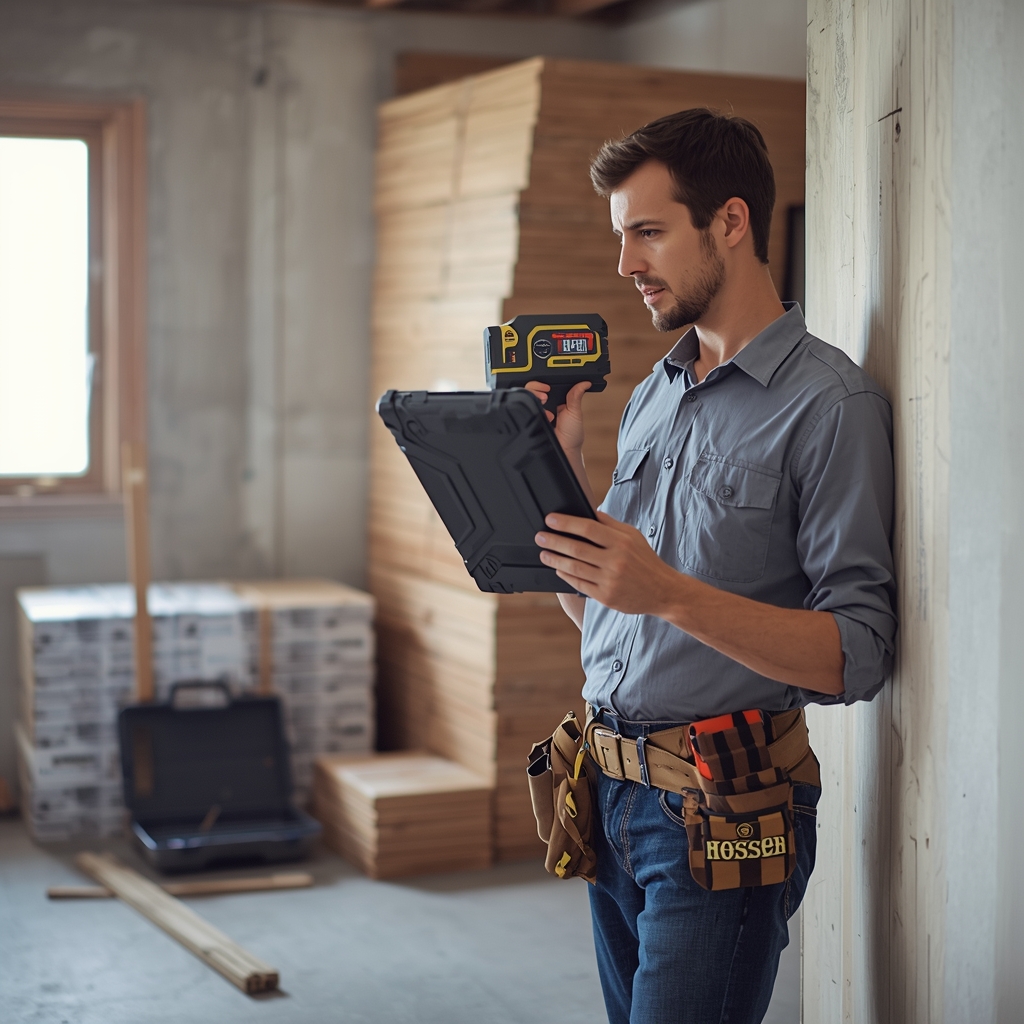
- Use a laser distance measurer for rooms over 20 ft — tape measures can sag and introduce error.
- Measure each wall twice from different starting points to catch inconsistencies.
- For flooring, deduct areas that won’t be covered: built-in wardrobes, islands, and hearths.
- Always calculate in feet and inches, not metres, when using US-based tools.
- Sketch a rough room outline with labelled dimensions before entering numbers — it catches missing sections.
For multi-room projects, calculate each room separately, note the results, then add them. Trying to estimate an entire home as one rectangle is how costly errors happen. AceCalculator’s sq ft calculator lets you run multiple calculations in sequence — bookmark it and work room by room.
Want to explore more calculation tools? Visit our About page to learn about AceCalculator’s methodology and the full suite of tools available — from math and finance to health and fitness.
Frequently Asked Questions
How does a sq ft calculator work?
A sq ft calculator multiplies the length and width of a space to find its total area in square feet. For non-rectangular shapes, it applies the correct geometric formula — such as πr² for circles or base × height ÷ 2 for triangles. You enter your measurements and the tool returns the result instantly, with no manual conversion needed.
What is the formula for calculating square footage?
For a rectangular room: Square Footage = Length (ft) × Width (ft). For example, a 15 ft × 12 ft room equals 180 sq ft. For irregular shapes, break the area into rectangles, calculate each, then sum the results.
How many square feet is a 10×10 room?
A 10×10 room has exactly 100 square feet (10 × 10 = 100). This is a common benchmark — a typical small bedroom or single-car garage bay is often referenced at this size.
Do I include closets when calculating square footage?
It depends on the purpose. For flooring inside the closet, yes — include it. For official real estate listings, most standards (including ANSI standards and local MLS guidelines) include closet space in gross living area. For HVAC sizing, closets are typically excluded from the calculation.
How much flooring do I need for 200 square feet?
Order 220 square feet — the standard 10% waste buffer accounts for cuts, defects, and pattern matching. For diagonal installations or complex rooms, increase the buffer to 15%, meaning you’d order 230 sq ft.
Can I use a sq ft calculator for outdoor areas like a deck or yard?
Yes. The sq ft calculator works for any flat surface — decks, patios, lawns, driveways, and garden beds. For raised garden beds or pools, combine the square footage result with AceCalculator’s volume calculator to determine how much soil, gravel, or water you need.
Is square footage the same as square meters?
No. One square meter equals approximately 10.764 square feet. So a 100 sq ft room is about 9.29 square meters. If you’re working with metric measurements, the calculator will handle unit conversion automatically.
How accurate is an online sq ft calculator?
The calculator is as accurate as the measurements you enter. Mathematical precision is exact — the formula is simply multiplication. The margin of error in practice comes from how carefully you measure. Using a laser measurer and rounding to the nearest quarter inch gives results accurate enough for professional material ordering.
Amanda Reeds, B.Sc. Mathematics
Content Researcher at AceCalculator
Amanda specialises in making technical measurement and calculation topics accessible to everyday users. With a background in applied mathematics and over five years of experience writing about home improvement, real estate, and DIY planning, she brings both precision and clarity to every guide. She has personally used AceCalculator’s square footage tool across three home renovation projects.
Conclusion: Get the Number Right the First Time
Square footage looks simple — but small errors compound quickly into wasted money or bad decisions. A reliable sq ft calculator eliminates the guesswork, handles different shapes automatically, and gives you a precise number in seconds rather than minutes.
Whether you’re ordering flooring for a single room, preparing a real estate listing, or sizing an HVAC unit, the principle is the same: measure twice, calculate once, and always add your waste buffer. AceCalculator’s free tool is purpose-built for exactly this — no sign-up required, no ads, no complications.
Disclaimer: This article is for informational purposes only. Measurements and calculations should always be verified by a qualified professional before making significant financial or construction decisions.