
By Amanda Reeds, Content Researcher & Health Writer at AceCalculator |
- Key takeaway: Forgetting names is a normal memory quirk rooted in how the brain encodes proper nouns — not a sign of dementia.
- Who this is for: Anyone who blanks on names at the worst possible moment and wants to know why.
- Why it matters: Knowing the actual cause helps you fix the problem — and stop catastrophizing about it.
- Reading time: ~10 minutes
It Happens to Everyone — But Nobody Talks About Why
You shake someone’s hand, hear their name, and three seconds later it’s completely gone. You’re standing there nodding, hoping they don’t ask you to introduce them to someone else. Sound familiar? You’re not losing your mind. You’re doing something the brain does constantly — filtering out information it hasn’t decided to store yet.
Why you forget names: Forgetting names happens because the brain processes proper nouns differently from other words. Names carry no inherent meaning — “Sarah” doesn’t describe anything about a person the way “doctor” or “mother” does. When you meet someone, your attention is split between listening, making eye contact, and managing first impressions, leaving almost no mental bandwidth to encode the name into long-term memory. This affects nearly everyone regardless of age or intelligence.
This article covers the neuroscience behind why name recall fails, why you can remember a face but not a name, what the actual warning signs of a memory problem look like, and what small habits can genuinely improve recall. This is informational content for people who want to understand their own memory — not a substitute for a doctor’s advice.
→ Check If Poor Sleep Is Wrecking My MemoryTable of Contents
- It Happens to Everyone
- Why the Brain Drops Names So Fast
- Why We Remember Faces But Not Names
- How Name Encoding Fails Step by Step
- Is Forgetting Names Normal or Serious?
- Dementia: Warning Signs, Stages, and Age of Onset
- Common Mistakes That Make It Worse
- What Actually Helps With Name Recall
- Active Recall vs Passive Hearing: A Comparison
- Frequently Asked Questions
- Conclusion
Why the Brain Drops Names So Fast
Names are, from a neurological standpoint, arbitrary labels. When you hear the word “nurse,” your brain immediately connects it to a whole web of associations — medical knowledge, past experiences, visual images. Hear the name “Marcus,” and there’s almost nothing to grab onto. No visual, no function, no category. Just a sound.
This is sometimes called the Baker/baker paradox, first described by psychologist memory researchers studying semantic encoding. If I tell you someone is a baker, you picture flour, aprons, bread. If I tell you someone’s last name is Baker, you have nothing. Same word — completely different recall rate. People remember the occupation “baker” roughly 3 times more reliably than the surname “Baker” in controlled memory tests.
The deeper issue is attention during first meetings. Research published by the National Institutes of Health confirms that the hippocampus — the brain’s memory-formation hub — needs sustained attention to properly encode new information. At a social gathering, your brain is handling handshakes, facial recognition, tone of voice, social anxiety, and background noise all at once. The name gets about one second of attention. That’s rarely enough to stick.

Why We Remember Faces But Not Names
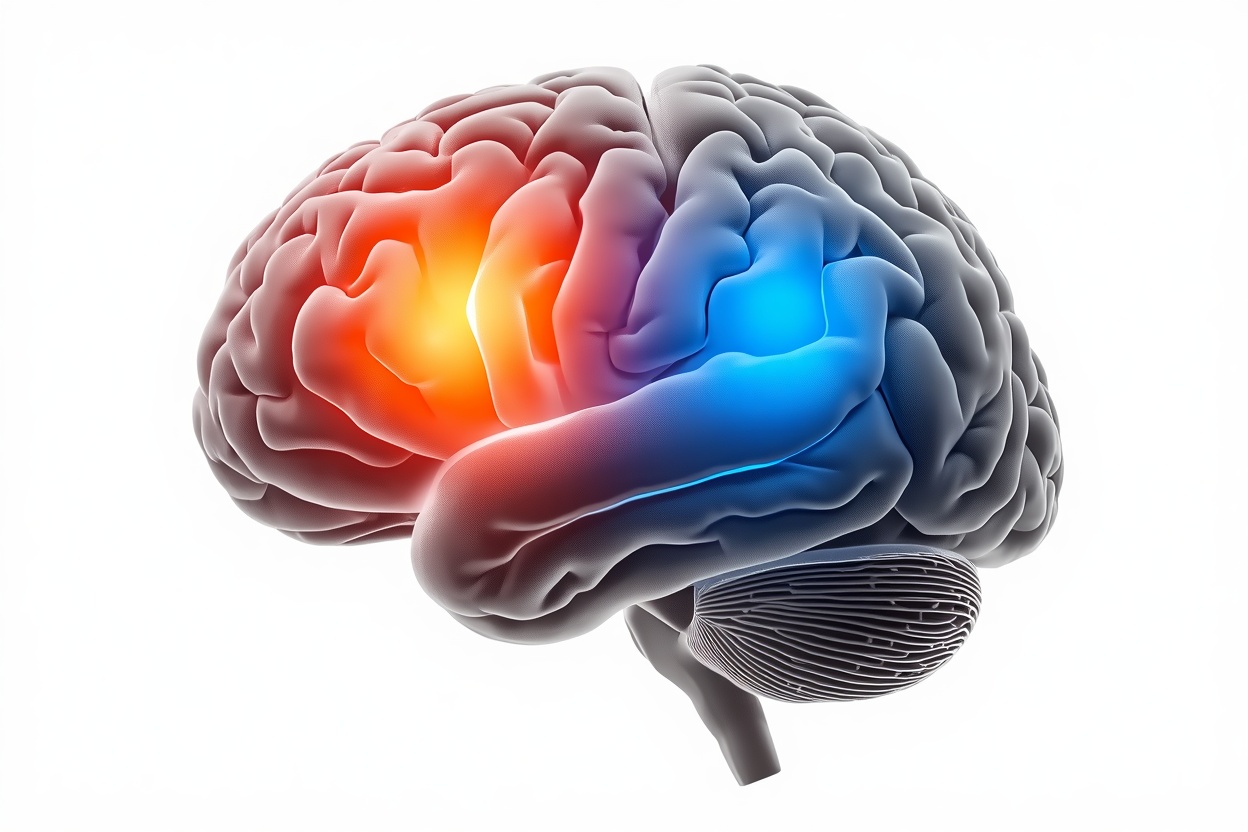
The face-name gap is real — and it has a straightforward biological explanation. Human faces are processed by a dedicated region of the brain called the fusiform face area, located in the temporal lobe. This region evolved specifically to recognize faces quickly, because distinguishing friend from foe was a survival issue. Names, on the other hand, are processed through the language system — a completely different network that doesn’t have the same deep evolutionary wiring for social recognition.
In other words, your brain has a specialized, high-speed processor for faces and a fairly general-purpose system for names. Names lose almost every time they compete for memory with visual information.
There’s also the matter of emotional tagging. The brain’s amygdala flags information as worth keeping when it carries emotional weight. Faces trigger micro-emotional responses — attraction, wariness, familiarity — that help stamp them into memory. A name spoken once in a noisy room triggers almost nothing emotionally, so the amygdala doesn’t signal the hippocampus to hold onto it.
This is also why you might forget the name of a thing — not just people. If you’re searching for the word “spatula” and it won’t come, you’ve hit what linguists call a tip-of-the-tongue state. You know you know it. The concept is fully formed in your head. The word just won’t surface. This happens because concept memory and word memory live in slightly different neural networks, and retrieval can fail at the word-label stage without the underlying knowledge being gone at all. For more on how health factors affect cognitive performance, see our guide on how nutrition and calorie balance affect daily brain function.
How Name Encoding Fails — Step by Step
- You hear the name — it enters working memory, which holds roughly 7 items for about 20 seconds.
- Attention splits — you start processing the person’s face, thinking of something to say, or managing social anxiety.
- No encoding trigger fires — because the name lacks meaning, your hippocampus doesn’t flag it for transfer to long-term memory.
- Working memory clears — within 30 seconds, anything not encoded is gone.
- You try to recall — and find nothing, because nothing was stored in the first place.
The critical window is those first 20–30 seconds. If you don’t actively do something with the name — repeat it, connect it to something, use it in conversation — it evaporates. This isn’t a memory problem. It’s an encoding problem. The name was never properly saved. You can’t retrieve what was never written to disk.
Sleep matters here too, more than most people realize. The brain consolidates new memories during deep sleep, moving them from the hippocampus to the cortex for long-term storage. Getting consistent, well-timed sleep is one of the most evidence-backed ways to improve memory consolidation. People who sleep less than 6 hours a night show measurably reduced recall performance on name-face association tasks in laboratory settings.
Is Forgetting Names Normal or Serious?
Here’s the honest answer most people actually need: yes, it’s normal. Forgetting someone’s name after meeting them once, or occasionally blanking on a word mid-sentence, falls well within the range of typical human memory function at any age.
What’s not normal is a different pattern entirely — forgetting people you’ve known for years, forgetting where you are, forgetting conversations that happened an hour ago, or having family members notice consistent changes in your behavior. That’s a meaningful distinction, and it’s worth taking seriously.
Is It Normal to Forget Someone’s Name?
Yes. Forgetting names you just learned, or occasionally blanking on the name of a person you haven’t seen in a while, is a universal human experience. It doesn’t reflect intelligence, attentiveness, or neurological health. Even people with exceptional memories — trained mnemonists, for example — work hard to encode names precisely because the brain doesn’t do it automatically.
Is It Normal to Forget the Name of Something?
Also yes. Tip-of-the-tongue states happen to virtually everyone, and they become slightly more frequent with age due to changes in processing speed, not memory loss per se. If the word comes back to you later, or if someone gives you a hint and it clicks instantly, the underlying memory was there. Retrieval just stalled temporarily.
Is It Normal to Forget My Own Name?
This one is different. Forgetting your own name in a moment of profound confusion, especially accompanied by disorientation, is not typical. A brief brain freeze after being startled from sleep is not the same thing. If someone regularly cannot recall their own name, that warrants medical evaluation promptly.
Is Forgetting Names Serious?
On its own, no. Forgetting names in everyday situations — at parties, in meetings, in grocery stores — is a common cognitive pattern with well-understood neurological causes. It becomes worth discussing with a doctor when it occurs alongside other symptoms, starts affecting daily function, or has worsened noticeably over a span of months. If you’re also tracking health metrics, tools like our BMI calculator and BMR guide can help you monitor the physical factors (weight, nutrition, activity) that influence cognitive health.
Dementia: Warning Signs, Stages, and Age of Onset
Because name forgetting is one of the things people worry about most, let’s address the dementia questions directly.
Is Forgetting Names the Start of Dementia?
Not typically. The early memory changes in dementia are different in character from normal name-forgetting. They involve forgetting events, not just labels — misplacing items repeatedly, forgetting recent conversations, getting lost in familiar places. Forgetting a new acquaintance’s name after one meeting is not a red flag. Forgetting a close family member’s name is.
What Are 5 Warning Signs of Dementia?
The Alzheimer’s Association identifies these as key early warning signs:
- Memory loss that disrupts daily life — asking the same questions repeatedly, forgetting recently learned information that used to be easy to retain.
- Difficulty planning or solving problems — struggling to follow a recipe you’ve used for years, or to manage bills you’ve handled comfortably before.
- Confusion with time or place — losing track of dates, seasons, or where you are and how you got there.
- Trouble with words in speaking or writing — stopping mid-sentence, repeating phrases, or calling objects by wrong names consistently.
- Withdrawing from social activities — pulling back from hobbies or social situations because keeping up has become difficult.
Occasionally forgetting a word or name is not the same as the persistent, progressive, and function-disrupting pattern seen in dementia. One forgotten name means nothing. A sustained pattern of memory failures affecting daily life — especially noticed by people who know you well — is worth a doctor’s evaluation.
What Is the 3 Question Test for Dementia?
The commonly referenced “3-question test” usually refers to a simplified version of the Mini-Mental State Examination (MMSE), where a clinician asks a patient to recall three words after a delay. It is a screening tool only — not a diagnosis. A doctor asking you to remember “apple, penny, table” and recall them 5 minutes later is checking short-term retention, not long-term memory. This test should always be administered in a clinical context, not used for self-diagnosis.
What Are the 7 Stages of Dementia?
The Global Deterioration Scale, developed by Dr. Barry Reisberg, describes 7 stages:
| Stage | Description |
|---|---|
| 1 — No impairment | Normal function, no memory complaints |
| 2 — Very mild decline | Normal age-related forgetfulness; no clinical evidence of a problem |
| 3 — Mild decline | Early-stage; family or colleagues may notice difficulties |
| 4 — Moderate decline | Clear cognitive decline; struggles with complex tasks like managing finances |
| 5 — Moderately severe | Cannot recall major life details without assistance |
| 6 — Severe | Requires assistance with daily activities; may not recognize close family |
| 7 — Very severe | Loss of ability to speak, walk, and swallow |
What Age Does Dementia Start?
Most dementia cases are diagnosed in people over 65. Early-onset dementia, defined as occurring before age 65, accounts for approximately 5–9% of all Alzheimer’s cases, according to the National Institute on Aging. This means that if you’re in your 30s or 40s and forgetting names at parties, dementia is almost certainly not what’s happening. The typical age of onset for the most common form, Alzheimer’s disease, is after 65, with risk increasing substantially after 85.

Common Mistakes That Make Name Forgetting Worse
Most people accidentally make this problem worse without realizing it. Here’s what actually sabotages name recall:
- Half-listening during introductions. You’re already thinking about what to say next while their name is still in the air. The name doesn’t get even a single second of focused attention.
- Never saying the name back. If you don’t use the name within the first 30 seconds — in a sentence, a question, a greeting — it vanishes from working memory before it ever gets stored.
- Assuming you’ll remember it later. You won’t, unless something caused it to encode. “I’ll remember that” is almost always wrong with proper nouns.
- Sleep deprivation. A single night of poor sleep can reduce memory consolidation by up to 40%, according to sleep research from the NIH. If you’re chronically under-sleeping, your name recall will reflect it. Our sleep timing calculator can help you find the right sleep window to protect memory.
- Anxiety about forgetting. The more stressed you are about blanking on a name, the more cognitive resources get redirected to managing anxiety — leaving fewer resources for actual encoding. It’s self-defeating.
What Actually Helps With Name Recall
Here’s what actually works, versus what sounds good but doesn’t:
1. Repeat the name immediately and out loud
When someone says “I’m James,” respond with “Nice to meet you, James.” This forces the name through your phonological loop at least twice and signals to your brain that this particular piece of information matters. Research on elaborative encoding consistently shows that active use of a new word within seconds of hearing it significantly improves retention.
2. Create a concrete visual association
If you meet someone named “Rose,” picture a rose somewhere on their face — not in a creepy way, just as a private mental note. The visual hook gives the name something to cling to. This is the technique competitive memorizers use when learning hundreds of names for demonstration events. It sounds silly, but it works because it connects an arbitrary label to something meaningful.
3. Use the name three times in the first conversation
Once at introduction, once mid-conversation, once at goodbye. Three exposures in a single encounter significantly increases the chance the name will consolidate during sleep that night. This is the difference between a one-second encounter with a word and three genuine retrievals of it.
4. Write names down immediately after meetings
For professional contexts — networking events, conferences — writing the name down within 2 minutes with one identifying detail (“Sarah — blue jacket, marketing background”) takes 20 seconds and can save you enormous embarrassment later. People who track health metrics carefully, as with our online health tools, often apply the same discipline of writing things down to their memory habits.
5. Stay off your phone before social events
Pre-meeting phone scrolling puts your brain in a distracted, scattered state. Even 2–3 minutes of intentional breathing or simply looking around the room before an introduction primes your attention system to be present enough to actually encode a name.
Active Recall vs Passive Hearing: Side-by-Side
| Approach | What Happens in the Brain | Recall Rate (Approximate) |
|---|---|---|
| Passive hearing — you hear the name, nod, move on | Name enters working memory briefly; no encoding trigger fires; gone within 30 seconds | Under 15% |
| Repeat aloud once — “Nice to meet you, James” | Phonological loop activates; hippocampus gets a second pass at the name | ~35–45% |
| Visual association + use 3x — repeat, associate, use in conversation | Multiple encoding pathways activated; emotional and visual tags added; hippocampus flags for consolidation | 60–75% |
| Written note + next-day review — write after meeting, look again in 24h | Post-sleep consolidation confirmed; spaced repetition begins | 85%+ |

Frequently Asked Questions
Why do I forget names immediately after hearing them?
Because your brain has too much to process during an introduction. Names enter working memory — which only holds information for about 20–30 seconds — but attention splits between listening, reading the person’s face, and managing the social dynamic. Without active encoding (repeating the name, associating it visually), it evaporates before long-term storage can happen.
Why do I forget names easily even when I try to remember?
Trying to remember in the moment often isn’t enough without a strategy. Passive attention rarely leads to successful encoding. Names need active processing — saying them aloud, connecting them to a visual or fact, or writing them down. People with excellent name recall use specific techniques; it’s a skill, not a talent.
Why we forget names but remember faces?
The brain has a dedicated region (the fusiform face area) specifically evolved for face recognition. Names go through the general language system, which lacks this specialization. Faces also carry emotional cues that trigger the brain’s memory-flagging system; names almost never do. This gap between face and name recall is universal across cultures and ages.
Why do I forget names of things, not just people?
This is the tip-of-the-tongue phenomenon. The concept is stored in one neural network; the word label lives in another. Retrieval can stall at the word level while the underlying knowledge remains intact. Stress, fatigue, and distraction make it more frequent. If the word comes back easily when prompted, the memory was there — retrieval just failed temporarily.
Is forgetting names the start of dementia?
In isolation, no. Forgetting names — especially new names, or names of people you rarely see — is a normal cognitive pattern at any age. Dementia-related memory changes involve forgetting events and information you know well, not just struggling with new name encoding. See a doctor if forgetting is persistent, progressive, and accompanied by other changes in daily function.
What age does dementia start, and should I be worried in my 40s?
The vast majority of dementia cases begin after age 65. Early-onset dementia (before 65) accounts for roughly 5–9% of all cases. If you’re in your 30s or 40s and forgetting names, the cause is almost certainly normal encoding failure — not the beginning of a neurodegenerative disease. If you’re genuinely concerned about memory changes, speak with a doctor rather than self-diagnosing.
What are the 5 warning signs of dementia I should actually watch for?
Watch for: memory loss disrupting daily life, difficulty with familiar tasks like cooking or managing bills, confusion about time or location, persistent word-finding problems (not occasional tip-of-the-tongue), and withdrawal from social activities due to cognitive difficulty. These patterns — especially if noticed by people who know you well — are worth a professional evaluation.
Does poor sleep actually make me forget names more easily?
Yes, meaningfully. Memory consolidation happens primarily during deep sleep. Sleeping under 6 hours per night consistently impairs the hippocampus’s ability to transfer newly learned information into long-term storage. Name-face association is one of the most sleep-sensitive memory tasks. Use our sleep timing calculator to optimize when you sleep, not just how long.
Amanda Reeds is a content researcher and health writer at AceCalculator, where she covers cognitive science, health metrics, and practical wellness topics. She holds a background in research communication and has spent the past several years making evidence-based health information genuinely readable for everyday audiences. Her work focuses on closing the gap between what science actually says and what people believe about their own minds and bodies.
The Short Version, If You Skimmed
You forget names because the brain treats them as arbitrary, meaningless labels. There’s no dedicated storage system for proper nouns, and during introductions your attention is divided across too many competing demands. The name gets about one second of bandwidth — rarely enough to stick.
The face-name gap is real and biological: faces have a dedicated processor; names run through general language circuits that weren’t built for rapid, emotional encoding. It’s not a character flaw. It’s a design limitation.
Forgetting names is not, on its own, a warning sign of dementia. The things worth paying attention to are sustained patterns: forgetting events rather than labels, losing track of familiar routines, confusion about place or time, and changes noticed by people around you. If those things are happening, see a doctor. If you just blanked on a coworker’s name in the hall, you’re fine.
What actually helps: say the name out loud immediately, create a visual association, use it three times in the conversation, write it down afterward, and protect your sleep. These aren’t tricks — they’re encoding strategies that work with how the brain actually stores information rather than against it.
Want to take a broader look at the physical factors that influence brain and body health? Our BMI calculator, BMR guide, and calorie intake tool are a good place to start building a clearer picture of your overall health.
→ Find My Ideal Sleep Window to Protect My Memory