

By Amanda Reeds, B.Sc. Health Sciences, Content Researcher at AceCalculator • Published
✓ Medically reviewed by Dr. Sarah Lim, MD — General Practitioner with 12 years of clinical experience in preventive health and metabolic conditions.
📋 Quick Summary
- What this covers: Healthy body fat ranges for women, how measurement works, and how to interpret your result.
- Who it’s for: Women who want a clearer picture of their body composition beyond BMI.
- Why it matters: Body fat percentage is a more accurate health marker than weight alone.
- 🕒 Reading time: 6 min read
Why Your Body Fat Percentage Tells a Story Your Scale Can’t
You’ve stepped on the scale, watched the number, and still felt unsure what it actually means for your health. Weight alone doesn’t tell you how much of your body is fat versus muscle, bone, or water — and that distinction matters far more than most people realise.
Female body fat percentage is the proportion of your total body weight that comes from fat tissue. A healthy range for adult women is generally 20–35%, depending on age and fitness level — but what’s “healthy” shifts across life stages, and the same number can mean very different things for a 25-year-old athlete versus a 55-year-old postmenopausal woman. This guide explains exactly what the ranges mean, how they’re measured, and how to use the results to make genuinely useful health decisions.
The AceCalculator Body Fat Calculator is a free, instant tool built for women (and men) who want a reliable body fat estimate without a gym appointment or expensive equipment.
📄 Table of Contents
- What Is Female Body Fat Percentage?
- Healthy Body Fat Ranges for Women by Age
- How to Measure Your Body Fat Percentage
- Real-World Example: Using the Calculator
- Body Fat Percentage vs. BMI: Which Is More Useful?
- Common Mistakes and Misconceptions
- Why Female Body Fat Percentage Matters for Health
- Tips for Improving Your Body Composition
- FAQ
What Is Female Body Fat Percentage?
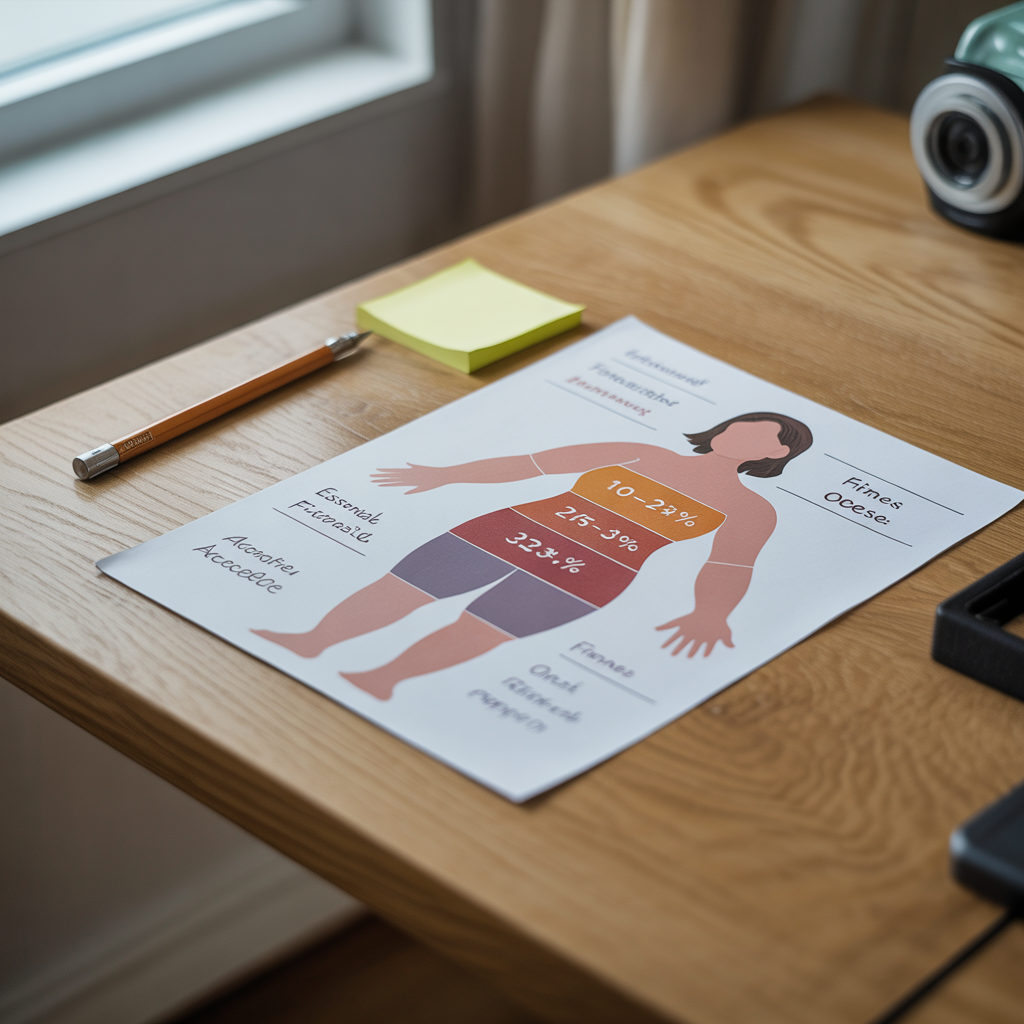
Body fat percentage is the share of your total body weight made up of fat — expressed as a percentage. It is widely considered a more meaningful health metric than weight alone because it separates fat mass from lean mass (muscle, bone, and organs).
Women naturally carry more body fat than men. This isn’t a flaw — it’s biological. Women require a minimum of approximately 10–13% body fat just for basic hormonal, reproductive, and organ function, according to the American Council on Exercise (ACE). This minimum is known as essential fat. Below this level, serious health risks emerge — including hormonal disruption and bone density loss.
Beyond essential fat, additional fat is stored as storage fat, which includes both subcutaneous fat (under the skin) and visceral fat (around internal organs). It is visceral fat — not total body fat — that carries the greatest metabolic risk.
Healthy Female Body Fat Percentage Ranges by Age and Category
The table below uses the widely referenced ACE classification system, which is among the most cited by fitness professionals and health organisations.
| Category | Age 20–39 | Age 40–59 | Age 60–79 |
|---|---|---|---|
| Essential Fat | 10–13% | 10–13% | 10–13% |
| Athlete | 14–20% | 14–20% | 14–20% |
| Fitness | 21–24% | 22–27% | 22–30% |
| Acceptable | 25–31% | 28–35% | 31–38% |
| Obese | 32%+ | 36%+ | 39%+ |
Source: American Council on Exercise (ACE) body fat classification chart.
Notice how the “acceptable” range shifts upward with age. This reflects the natural change in body composition as women age — particularly after menopause, when hormonal shifts tend to increase fat storage. A 58-year-old woman at 32% body fat is in a very different metabolic position than a 25-year-old at the same number.
How to Measure Your Female Body Fat Percentage
Several methods exist, ranging from a tape measure at home to clinical scans at a hospital. Here are the most practical options:
Method 1 — Navy Circumference Formula (Best for Home Use)
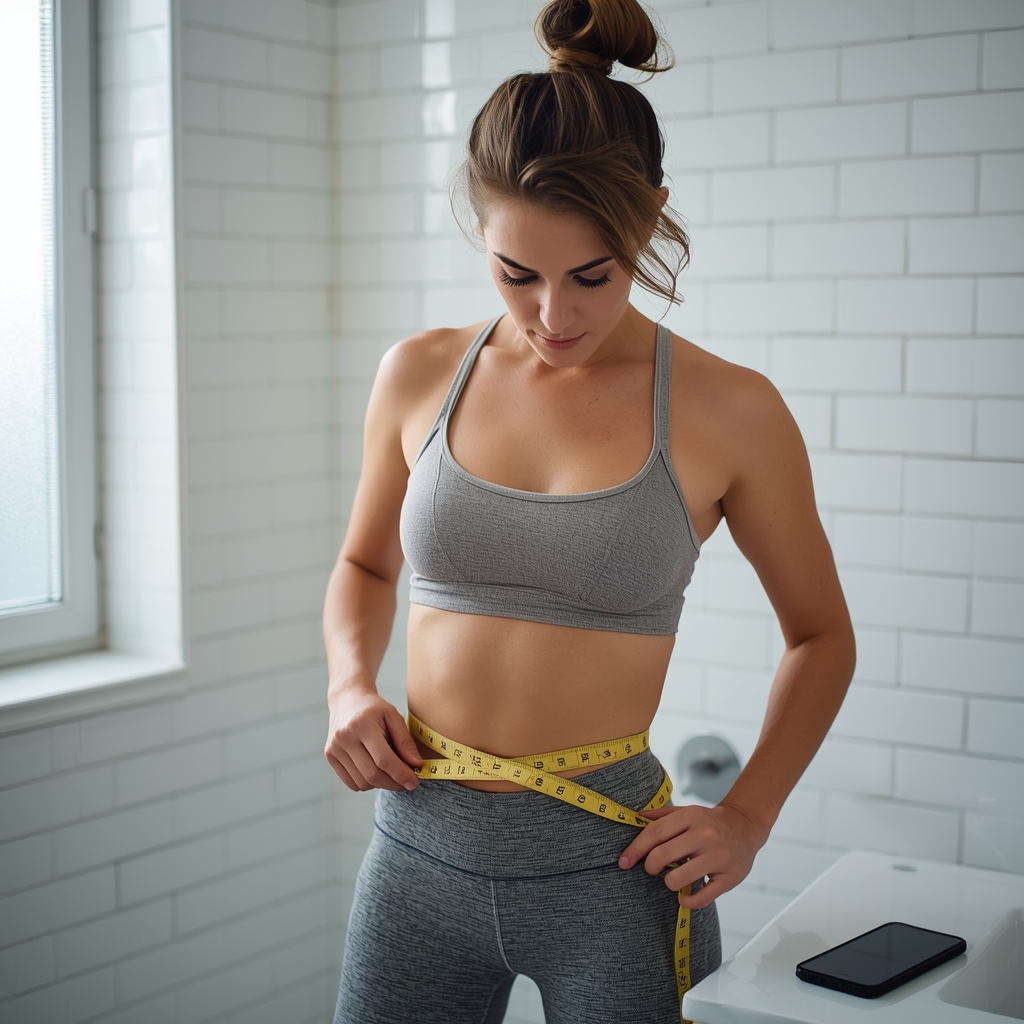
This method uses body measurements — neck, waist, and hips — entered into a validated equation developed by the U.S. Navy. It is the method used by AceCalculator’s Body Fat Calculator and is widely regarded as accurate to within 3–4% when measured correctly. No equipment beyond a flexible tape measure is needed.
Method 2 — Skinfold Calipers
A trained technician pinches skin at multiple sites (usually 3–7 locations) and measures the fold thickness. Accuracy depends heavily on the technician’s skill and is typically ±3–5%.
Method 3 — Bioelectrical Impedance Analysis (BIA)
Many bathroom scales and gym machines use BIA, which passes a small electrical current through the body and estimates fat from resistance. It’s convenient but sensitive to hydration — results can vary by 5% or more depending on when you last ate or drank.
Method 4 — DEXA Scan (Gold Standard)
Dual-energy X-ray absorptiometry (DEXA) is the most accurate non-invasive method, with error margins under 2%. It measures bone, muscle, and fat in different regions of the body. It requires a clinical setting and typically costs £50–£150 in the UK or $50–$200 in the US.
⚡ Quick Steps: Get Your Estimate Right Now
- Grab a flexible tape measure.
- Measure your neck at its narrowest point.
- Measure your natural waist (narrowest point, usually 1 inch above the navel).
- Measure your hips at the widest point.
- Enter your height, weight, and those three measurements into the Body Fat Calculator.
- Get your result and category in seconds.
Real-World Example: Using the Calculator
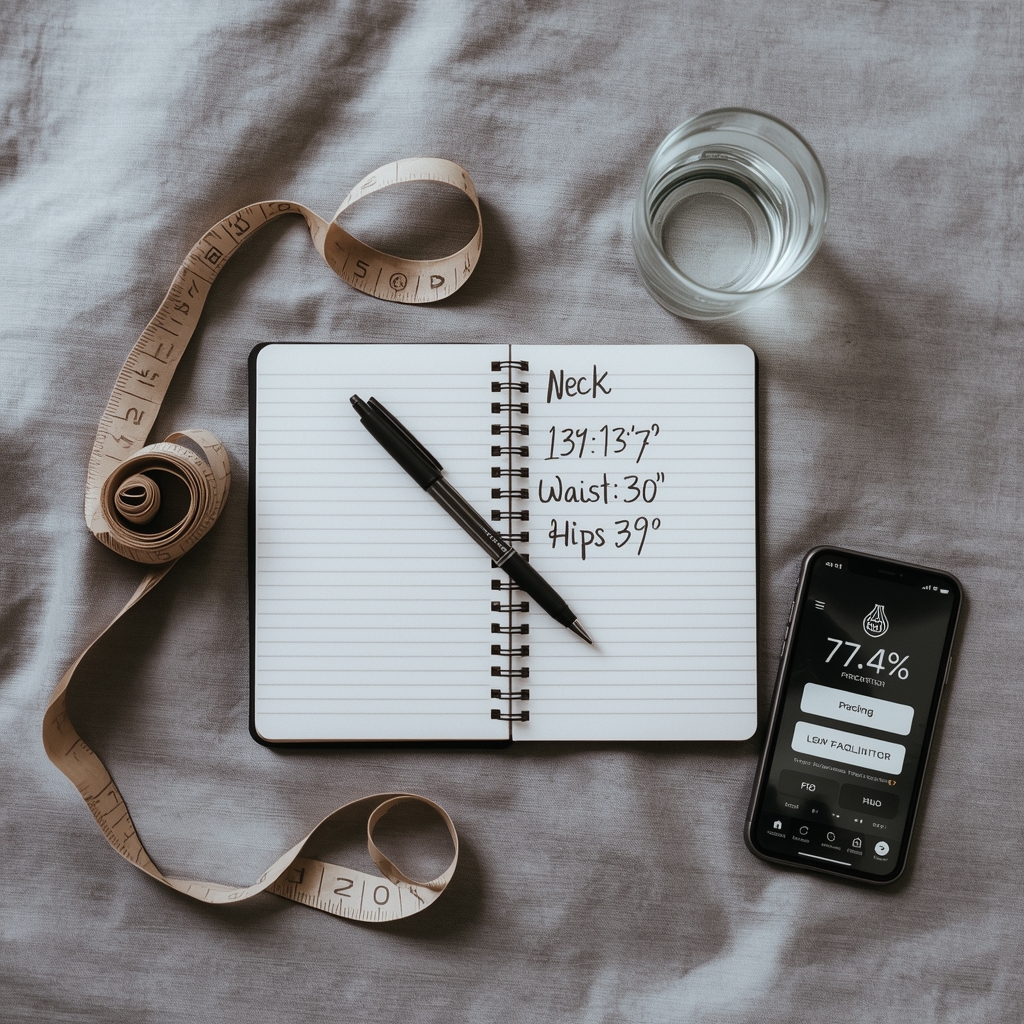
When I first used the AceCalculator Body Fat tool, I entered the following details for a 34-year-old woman, 5’5″ (165 cm) tall, weighing 145 lbs (65.8 kg):
- Neck: 13.5 inches (34.3 cm)
- Waist: 30 inches (76.2 cm)
- Hips: 39 inches (99 cm)
The result came back at approximately 27.4% body fat — placing her in the “Acceptable” range for her age group. More importantly, the calculator also flagged that she was close to the lower boundary of that range, which means small improvements in diet or activity could push her into the “Fitness” category without drastic changes.
That kind of nuance is exactly what makes body fat percentage more useful than simply standing on a scale. You can also pair this with the BMR Calculator to understand how many calories your body burns at rest — a key factor in any body composition plan.
Body Fat Percentage vs. BMI: Which Is More Useful for Women?
BMI (Body Mass Index) is a ratio of weight to height. It’s quick to calculate and widely used in clinical settings — but it has a critical blind spot: it tells you nothing about body composition.
| Factor | BMI | Body Fat % |
|---|---|---|
| Measures fat directly | ✗ No | ✓ Yes |
| Accounts for muscle mass | ✗ No | ✓ Yes |
| Age-adjusted ranges | ✗ No | ✓ Yes |
| Requires only height + weight | ✓ Yes | ✗ No |
| Useful for tracking change | Limited | ✓ Yes |
A woman who strength-trains regularly may have a “normal” BMI but a very low body fat percentage — or conversely, a woman of average weight can have a high fat percentage with low muscle mass, a condition sometimes called “skinny fat” or normal-weight obesity. The BMI Calculator is still useful as a screening tool, but pairing it with body fat percentage gives a much fuller picture.
Common Mistakes and Misconceptions
⚠ Watch Out For These
- Measuring waist incorrectly: Many people measure at the belly button rather than the natural waist (narrowest point). This inflates the result by 1–3 inches and skews your body fat estimate upward.
- Comparing to male ranges: Men and women have entirely different healthy ranges. A 22% body fat is lean for a woman but borderline high for a male athlete. Never use male charts.
- Confusing low fat with healthy: Too little body fat is dangerous. Women below 13–16% body fat may lose their menstrual cycle, experience hormonal disruption, or develop bone density issues.
- Treating BIA scale results as gospel: Bathroom scale BIA readings vary wildly with hydration. Weigh and measure at the same time of day under the same conditions for meaningful tracking.
- Ignoring the distribution: Where fat sits matters. High visceral fat (around the abdomen) carries greater cardiovascular risk than subcutaneous fat on the hips or thighs.
Why Female Body Fat Percentage Matters for Your Health
Body fat percentage is one of the strongest predictors of metabolic health risk in women. According to the CDC, excess body fat — particularly visceral fat — is associated with increased risk of type 2 diabetes, cardiovascular disease, and certain cancers.
Key health implications of body fat percentage in women:
- Hormonal health: Adipose tissue produces oestrogen. Both too much and too little fat disrupts hormonal balance, affecting menstrual cycles and fertility.
- Bone density: Women with very low body fat are at higher risk of osteopenia and osteoporosis, particularly before and after menopause.
- Cardiovascular risk: Visceral fat releases inflammatory markers that raise blood pressure and insulin resistance.
- Energy and metabolism: Your basal metabolic rate — how many calories you burn at rest — is directly tied to lean muscle mass. Monitoring body fat helps you protect that muscle. Use the BMR Calculator to see how this applies to you.
- Fitness progress: The scale doesn’t show when you lose fat and gain muscle simultaneously. Body fat percentage does.
A 2022 study in the Journal of the American Heart Association found that women with body fat above 35% had significantly elevated cardiometabolic risk markers even when BMI appeared normal — reinforcing why body fat tracking adds value that BMI cannot provide.
Tips for Improving Your Body Composition
💡 Evidence-Based Tips
- Prioritise resistance training: Building lean muscle increases your BMR and lowers your fat percentage without necessarily losing weight. Aim for 2–3 sessions per week.
- Track calories with intent: A small deficit of 300–400 kcal/day is sufficient for gradual fat loss without muscle loss. Use the Calories Calculator to find your target.
- Prioritise protein: Research consistently shows that 1.6–2.2g of protein per kg of body weight preserves muscle during fat loss. For a 65 kg woman, that is 104–143g per day.
- Re-measure every 4–6 weeks: Body fat changes slowly — daily measurements create noise, not signal. Use the same method and same time of day each check-in.
- Don’t chase a number — chase a category: Moving from “Obese” to “Acceptable” is a clinically meaningful win, even if you never reach “Athlete.” Focus on progress, not perfection.
- Sleep adequately: Chronic sleep deprivation increases cortisol, which promotes abdominal fat storage. The Sleep Calculator can help you find your optimal sleep window.
Explore the full range of health and fitness tools available on the AceCalculator Fitness & Health hub — including tools for BMI, BMR, body fat, calories, and sleep.
Frequently Asked Questions
What is a healthy female body fat percentage?
A healthy female body fat percentage for most adult women falls between 21–35%, depending on age and fitness level. The “Fitness” category (21–24% for women aged 20–39) represents an optimal range for general health and performance. Women aged 40–59 naturally carry slightly more fat, and ranges shift accordingly.
How do I calculate my body fat percentage as a woman?
The easiest method is the U.S. Navy circumference formula, which uses your height, weight, neck, waist, and hip measurements. Enter these into the AceCalculator Body Fat Calculator for a free, instant estimate. No gym or equipment needed.
Is 30% body fat too high for a woman?
Not necessarily. For women aged 40–59, 28–35% falls in the “Acceptable” range. For women aged 20–39, 30% is at the upper edge of Acceptable. Context matters — the same number in a 30-year-old versus a 55-year-old carries different health implications.
What is the minimum safe body fat percentage for a woman?
Essential fat for women is approximately 10–13%. Falling below this threshold can disrupt hormone production, impair reproductive function, and reduce bone density. Even elite female athletes typically maintain at least 14–20% body fat.
How is female body fat percentage different from BMI?
BMI measures weight relative to height but does not distinguish fat from muscle. Two women with the same BMI can have very different body fat percentages. A BMI Calculator is a useful first screen, but body fat percentage offers a more accurate metabolic health picture.
Does body fat percentage change with age in women?
Yes. Women naturally gain body fat as they age, particularly after menopause when oestrogen levels decline and fat tends to redistribute to the abdomen. The healthy “Acceptable” range increases by approximately 3–7% across each age decade to account for this.
Can I reduce body fat without losing weight?
Yes — this is called body recomposition. By doing resistance training and eating sufficient protein, women can lose fat and gain muscle simultaneously. The scale may barely move, but body fat percentage decreases. This is why tracking body fat — not just weight — is so important.
How often should I measure my body fat percentage?
Every 4–6 weeks is ideal. Body fat changes slowly, so daily or even weekly measurements tend to show noise rather than real progress. Use the same method, same time of day, and similar hydration conditions each time for consistency.
Amanda Reeds, B.Sc. Health Sciences
Content Researcher at AceCalculator
Amanda holds a B.Sc. in Health Sciences and specialises in translating clinical health data into clear, practical guidance for everyday readers. She has written extensively on body composition, metabolic health, and fitness tools. Her work at AceCalculator focuses on helping users make sense of their health numbers.
✓ Medically reviewed by Dr. Sarah Lim, MD — General Practitioner with 12 years of clinical experience in preventive health and metabolic conditions.
Final Thoughts
Your female body fat percentage is one of the most meaningful numbers you can know about your body — more informative than weight alone, and more actionable than BMI. It tells you how your body is actually composed, where health risks may be building, and how your fitness efforts are paying off.
The healthy ranges vary by age, and that’s by design. What matters most isn’t hitting a single ideal number — it’s understanding where you are, which direction you’re moving, and what changes would make a real difference to your health.
The fastest way to find out where you stand is to use the free tool. It takes under a minute, and the result gives you something concrete to work with.
Disclaimer: This article is for informational purposes only and does not constitute professional medical advice. Body fat percentage estimates from circumference-based formulas carry a margin of error of ±3–5%. Always consult a qualified healthcare professional before making significant changes to your diet, exercise programme, or health management plan.
8 thoughts on “Female Body Fat Percentage: What’s Healthy, What’s Not, and How to Know Yours”
My favorite part is how easy it is to save and reference data—this makes using Female Body Fat Percentage Calculator much more practical during ongoing Weight Loss
Glad you noticed—that’s the goal. A well-structured tool helps users get faster and more accurate results
This tool works really well—it helped me track my training and noticeably improve my soccer performance, especially stamina and consistency.
Glad it helped—tracking progress is key. Using a proper fitness calculator can really improve consistency in soccer training.
This guide on female body fat percentage is really informative. I was also wondering if you offer an email subscription or newsletter, as I’d like to stay updated on topics like healthy body fat percentage for women and tools to calculate body fat percentage. It would be great to get new guides and calculator updates directly.
Thanks for your interest! We’re glad you found our guide on female body fat percentage helpful. We’re working on adding a newsletter so users can stay updated on healthy body fat ranges for women and new tools to calculate body fat percentage. In the meantime, feel free to explore more of our health and fitness calculators.
This is a very helpful guide on female body fat percentage. I like how you explained what is considered a healthy body fat percentage for women and how to estimate it using different methods. The breakdown makes it easier to understand how to calculate body fat percentage and track fitness progress accurately.
Thanks for your feedback! We’re glad you found our guide on female body fat percentage useful. Understanding healthy body fat ranges for women and using the right methods to calculate body fat percentage can really help with tracking fitness and overall health. Feel free to explore more of our health and fitness calculators.