
By Amanda Reeds, Content Researcher at AceCalculator | Published | Updated
Quick Summary
- Key takeaway: Bad credit loans and personal loans for bad credit exist, but the amount you can borrow and which bank or lender will say yes depends heavily on your score.
- Who this is for: Anyone with a credit score below 580 who needs a personal loan in the US, including people who only need $200 to $500.
- Why it matters: The wrong loan can trap you in a debt cycle. Knowing your real options protects you from that.
- Reading time: About 12 minutes.
You Need a Loan, but Your Credit Score Feels Like a Dead End
If you’ve ever been turned down for a personal loan because of a low credit score, you know exactly how frustrating that feels. Maybe it’s a car repair, a medical bill, or rent. You need the money, and lender after lender keeps shutting the door. Here’s the thing: bad credit loans do exist, and millions of Americans use them every year.
Bad credit loans, also called personal loans for bad credit, are personal loans offered to borrowers with credit scores typically below 580. They are available through online lenders, credit unions, and a small number of banks in the USA. These loans usually carry higher interest rates than standard loans, but they give people with poor or limited credit history access to funds ranging from $200 to $10,000 or more.
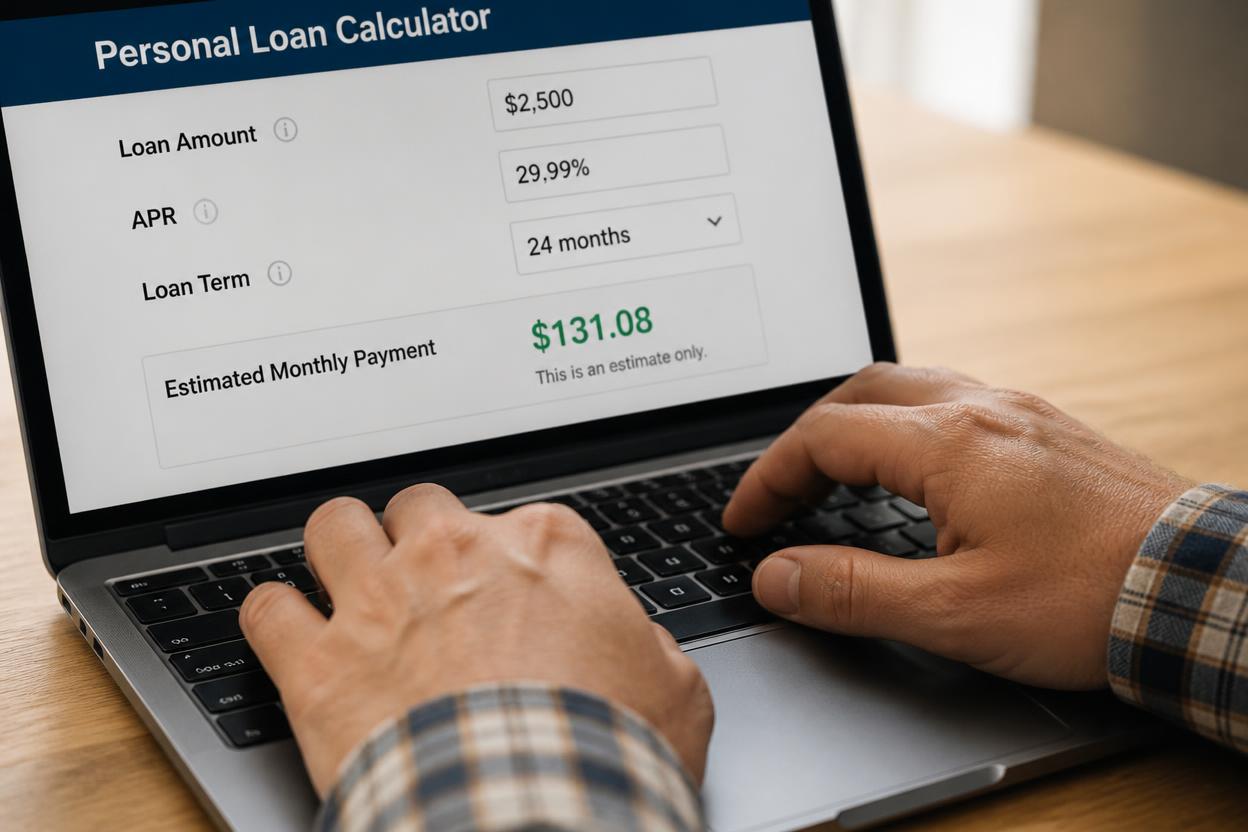
Before you apply anywhere, it helps to understand how the math actually works. The difference between a 25% APR loan and a 90% APR loan on $2,000 over 24 months is nearly $1,400 in extra interest. That’s not a small number. Run a loan payment calculator before you commit to anything, so you know your true monthly cost in advance.
Table of Contents
- You Need a Loan, but Your Credit Score Feels Like a Dead End
- What Are Bad Credit Loans, Really?
- Will Your Bank Approve a Personal Loan for Bad Credit?
- How Much Can You Actually Borrow With Bad Credit?
- How to Apply for a Bad Credit Personal Loan Step by Step
- Real-World Scenarios: What These Loans Look Like in Practice
- Common Mistakes That Cost Borrowers Thousands
- Why Bad Credit Loans Can Actually Help When You Use Them Right
- Bad Credit Loan Options: A Side-by-Side Comparison
- Frequently Asked Questions
- Final Thoughts
What Are Bad Credit Loans, Really?
A bad credit loan is simply a personal loan that lenders offer to people whose credit scores fall below what traditional banks typically require. Most conventional lenders want a score of 660 or higher. If yours is below 580, you’re generally considered a subprime borrower. That’s exactly who bad credit loan products are built for.
According to the Consumer Financial Protection Bureau (CFPB), a significant share of American adults have subprime credit scores, which limits their access to affordable credit. Lenders who serve this market take on more risk, so they charge more in return. That cost shows up as higher interest rates (APR), origination fees, and sometimes stricter repayment schedules.
There are several types of bad credit loan products available in the US market:
- Unsecured personal loans: No collateral needed; approval based on income, employment, and credit history.
- Secured personal loans: Backed by collateral like a car or savings account; usually lower rates.
- Credit union loans: Often friendlier to lower scores; federal credit unions cap APR at 18% on most products.
- Payday alternative loans (PALs): Offered by federal credit unions; amounts from $200 to $2,000 with a 28% APR cap.
- Online lender loans: Fast funding, wider credit acceptance, but rates can range widely from 6% to 36%+.
Will Your Bank Approve a Personal Loan for Bad Credit?
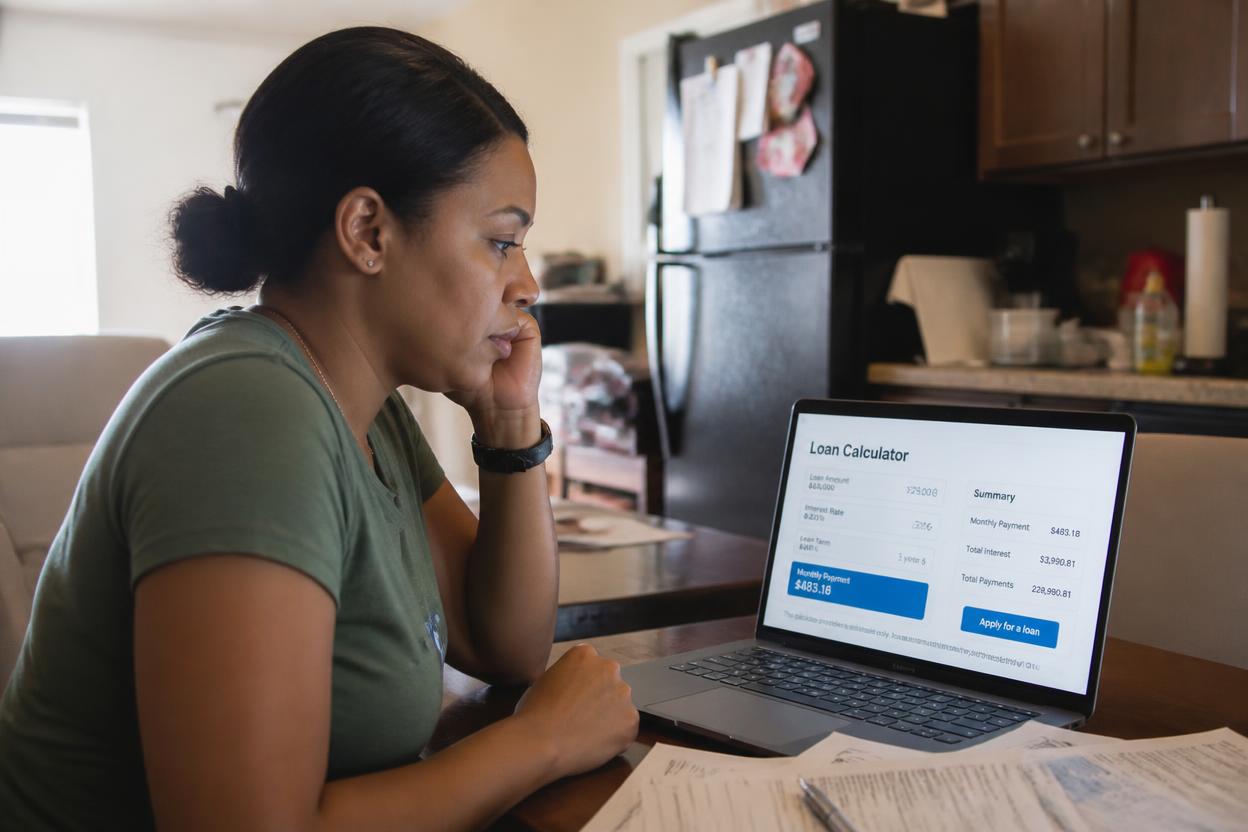
Probably not, and for some of the biggest banks in the country, the answer is no for everyone, regardless of score. Bank of America, Chase, and Capital One do not offer traditional personal loans at all, according to 2026 lender reviews from NerdWallet and Bankrate. If your own bank is one of those three, a personal loan simply isn’t a product they sell, full stop.
Banks that do offer personal loans, including Wells Fargo, Citibank, PNC, and U.S. Bank, generally underwrite for good to excellent credit. Wells Fargo’s personal loan typically requires a score in the 660 range, and most other large banks set a similar bar. With a score below 580, you’re unlikely to qualify for a standard unsecured personal loan from any of these lenders, no matter how long you’ve banked with them.
That gap is exactly why online and fintech lenders dominate this corner of the market. According to 2025 TransUnion data, fintech companies now service more unsecured personal loan debt than banks and credit unions combined. Online lenders built their underwriting models around the credit profiles that traditional banks turn away, which is the main reason this guide leans so heavily on them.
There’s one exception worth knowing about: small-dollar programs tied to an existing checking account. Bank of America’s Balance Assist lets eligible checking customers borrow up to $500 for a flat $5 fee, repaid over three months, with no traditional credit check. U.S. Bank’s Simple Loan works the same way for amounts up to $1,000. Both look at your banking relationship and cash flow instead of your credit score, which makes them worth a call before you apply anywhere else for a small, short-term amount.
If you own a paid-off car, a secured loan against the title is another route people overlook. Running the numbers through an auto loan calculator will show whether the lower rate you’d get by pledging the vehicle is actually worth the risk of losing it if you fall behind.
How Much Can You Actually Borrow With Bad Credit?
Most lenders working with bad credit cap loans somewhere between $200 and $3,000, though a smaller group of online lenders will go up to $10,000 or more for borrowers with steady income and a clean repayment record elsewhere. If you’re picturing a $20,000 personal loan with a 520 credit score, that’s realistic at only a handful of lenders, and you’ll pay a rate near the top of their range to get it.
On the small end, NCUA rules give federal credit unions two structures to work with. A PAL I loan runs from $200 to $1,000 over a term of one to six months, and you need at least one month of credit union membership first. A PAL II loan goes up to $2,000 with no minimum amount and a term of up to 12 months, and you can apply the same day you join. Both cap the APR at 28% plus a $20 application fee, regardless of your score.
For context on where bad credit borrowing typically lands, the average personal loan balance across all credit tiers was $19,333 as of September 2025, according to Experian. That figure includes prime borrowers with much larger loans, though. TransUnion reports the average balance on a newly opened personal loan account was closer to $6,700 in the fourth quarter of 2025, and bad credit borrowers usually sit well below even that, often in the $1,000 to $4,000 range for a first loan.
Before you settle on an amount, check what the payment would actually do to your budget. One quick way: divide your expected monthly payment by your take-home pay using a percentage calculator. If a $20,000 loan would push your payment past 15% to 20% of your monthly income, you’re better off borrowing less, even if a lender approves you for more.
How to Apply for a Bad Credit Personal Loan Step by Step
Applying for a bad credit personal loan is more approachable than most people think. The key is being prepared before you hit “submit” on any application. Every hard inquiry can temporarily lower your score by a few points, so you want each application to count.
Quick Action Steps
- Check your credit score for free (annualcreditreport.com or your bank’s app).
- Dispute any errors on your credit report before applying.
- Use a loan calculator to figure out the monthly payment you can actually afford.
- Pre-qualify with 2 to 3 lenders using soft-pull checks (no score impact).
- Compare APR, loan term, and total repayment cost, not just the monthly amount.
- Submit a formal application with your chosen lender.
- Read the full loan agreement before signing, paying attention to prepayment penalties.
Step 1: Know Your Numbers Before You Apply
Pull your credit report from AnnualCreditReport.com. It’s the official, government-mandated free source. Look for errors. According to the Federal Trade Commission, roughly 1 in 5 Americans has an error on at least one credit report that could affect their score. Fixing even one error can bump you up 20 to 30 points in some cases.
Step 2: Pre-Qualify Without Hurting Your Score
Most reputable online lenders now offer a soft-pull pre-qualification process. You enter basic information, things like income, employment, and loan amount, and they show you estimated rates without touching your credit score. Use this feature with multiple lenders at the same time so you can compare real offers side by side.
Step 3: Compare Total Cost, Not Just Monthly Payments
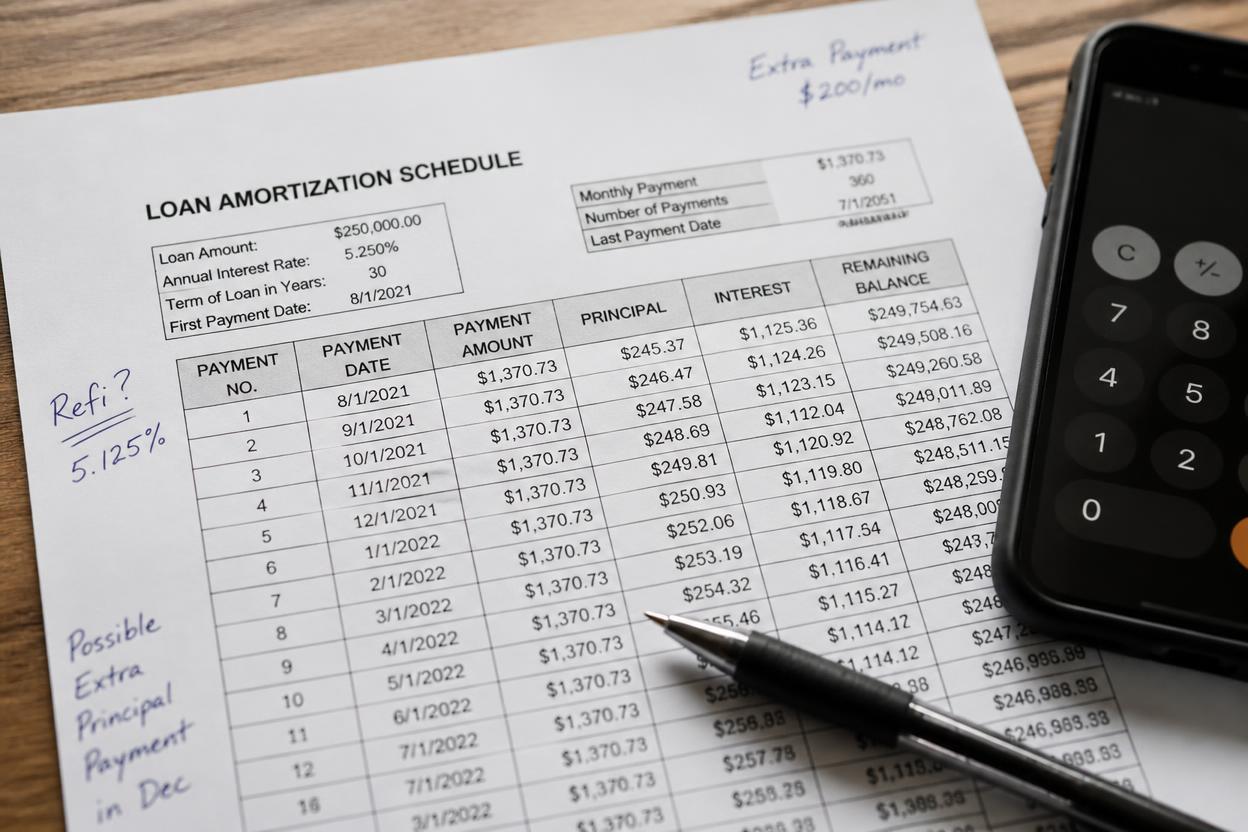
A lender might offer $3,000 at 36% APR over 36 months, while another offers the same amount at 25% APR over 24 months. The monthly payment on the first may look smaller, but the total cost is far higher. A loan calculator shows you the full picture in seconds: total interest paid, amortization schedule, everything.
Real-World Scenarios: What These Loans Look Like in Practice
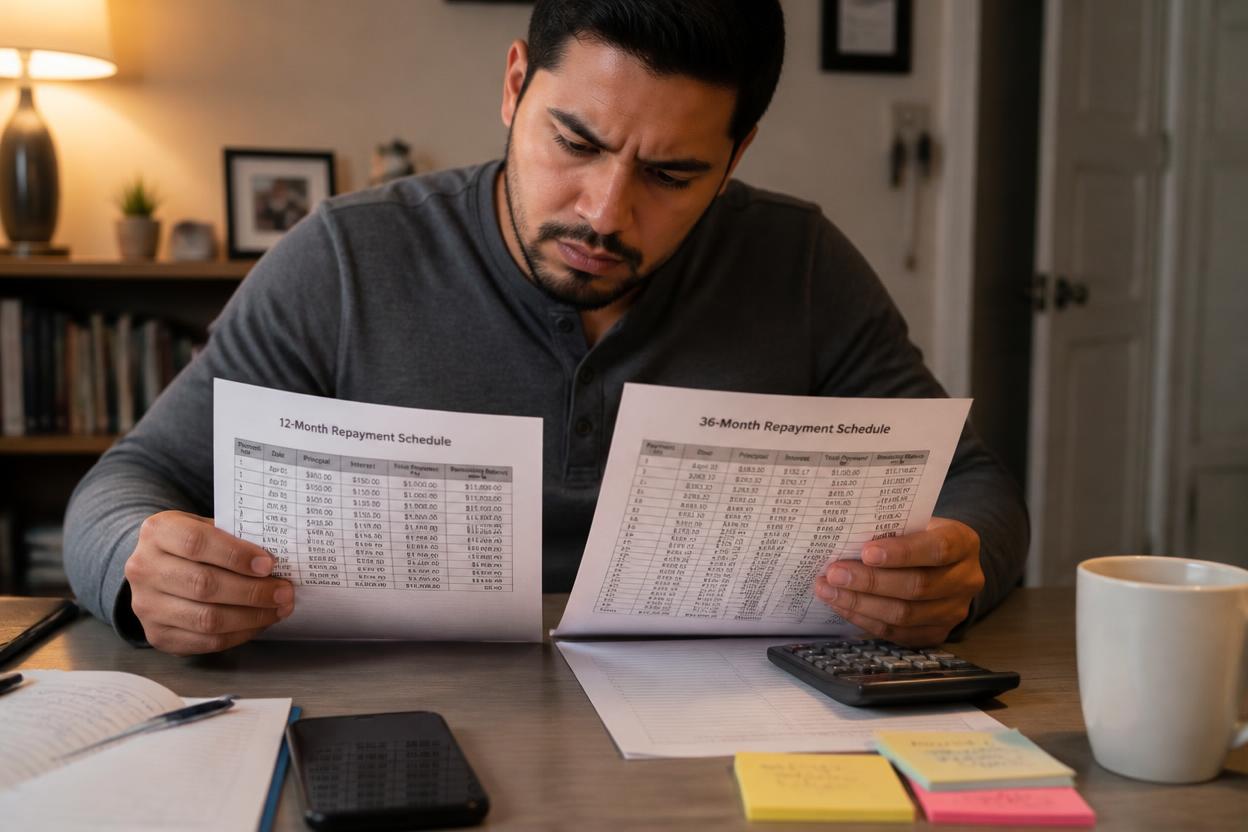
Numbers make this real. Here are four scenarios that reflect what borrowers with bad credit actually face in the US, from a small emergency bill to a larger consolidation loan.
Scenario A: Urgent Car Repair. Maria, a rideshare driver in Ohio, needs $1,500 to repair her transmission. Her credit score is 545. She pre-qualifies with an online lender at 29.99% APR for 12 months. Her monthly payment is about $143, and she’ll pay around $218 in total interest. Not cheap, but the alternative was losing her income entirely.
Scenario B: Medical Bill Consolidation. James in Texas has $4,200 in medical debt spread across three bills at various collection stages. His credit score is 560. He takes a secured personal loan at 19.5% APR over 24 months, pledging a savings account as collateral. Monthly payment: $206. Total interest: $742. He avoids further collection damage and simplifies repayment to one bill.
Scenario C: Credit-Builder Loan. Priya in California has almost no credit history (a thin file). She joins a federal credit union and takes a $500 credit-builder loan at 15% APR over 12 months. Each payment is reported to all three bureaus. After 12 months, her score climbs from 490 to 630, enough to access far better loan products. Her total interest paid was under $40.
Scenario D: Small Emergency Bill. Derek, a warehouse associate in Georgia, has a 510 credit score and needs $450 to cover a utility shutoff notice. He qualifies for Bank of America’s Balance Assist through his existing checking account and pays a flat $5 fee instead of interest. He repays the $455 total over three installments across 90 days. No credit check was involved, and the loan never touches his credit report, so it doesn’t help his score, but it doesn’t put it at risk either.
Common Mistakes That Cost Borrowers Thousands
The biggest financial mistakes in this space aren’t hard to spot. They’re just surprisingly easy to fall into when you’re under pressure. Here’s what to watch for.
⚠ Watch Out For These Mistakes
- Accepting the first offer you see. APRs for bad credit loans vary wildly, sometimes by 20+ percentage points between lenders for the same borrower profile.
- Ignoring origination fees. A $2,000 loan with a 6% origination fee means you receive $1,880 but repay the full $2,000 plus interest.
- Borrowing more than you need. Lenders often encourage larger amounts, and every extra dollar costs you in interest.
- Choosing a long repayment term just to lower the monthly payment. Stretching 12 months to 36 months on a high-APR loan can nearly triple your total interest cost.
- Using payday loans as a substitute. Payday loans carry effective APRs of 300% to 400%+ and trap borrowers in rollover cycles. They are not the same as bad credit personal loans.
- Not checking if the lender reports to credit bureaus. If they don’t report your on-time payments, the loan does nothing to rebuild your score.
- Trusting a site that promises guaranteed approval. Legitimate lenders always check income and identity before approving anything. Sites offering instant guaranteed loans for bad credit, with no verification at all, are a common scam pattern.
Why Bad Credit Loans Can Actually Help When You Use Them Right
A bad credit personal loan isn’t a punishment. It’s a financial tool. Used deliberately, it can set you up for a better credit position within 12 to 24 months. Here’s why:
- Builds payment history: Payment history is the single largest factor in your FICO score (35%). Every on-time payment builds toward a stronger profile.
- Consolidates high-interest debt: Replacing multiple high-APR debts with a single installment loan often lowers your overall monthly interest cost.
- Adds credit mix: Having an installment loan alongside revolving credit (credit cards) improves your credit mix, which accounts for 10% of your FICO score.
- Covers emergencies without wrecking your finances: A controlled loan is far less damaging than overdraft fees, utility cutoffs, or missed rent.
- Fixed repayment schedule: Unlike a credit card with a revolving balance, a personal loan has a clear end date, which helps with budgeting.
When you’re managing loan math alongside broader personal finance decisions, the key is always running the numbers first. An early payoff strategy, even on a higher-rate loan, can meaningfully cut what you pay in total interest over the life of the loan.
Bad Credit Loan Options: A Side-by-Side Comparison
Not all bad credit loan sources are created equal. Here’s how the main options compare across the factors that matter most to borrowers:
| Loan Source | Typical APR Range | Min. Credit Score | Funding Speed | Reports to Bureaus? |
|---|---|---|---|---|
| Online Lenders (e.g., Upstart, Avant) | 9% to 36%+ | 550 to 580 | 1 to 3 business days | Yes (all 3) |
| Federal Credit Unions | Up to 18% (capped) | No hard minimum | 2 to 5 business days | Yes |
| Bank Small-Dollar Programs | Flat fee, not APR | No credit check | Same day | No |
| Secured Bank Loans | 7% to 20% | Varies (collateral helps) | 3 to 7 business days | Yes |
| Payday Loans | 300% to 400%+ effective APR | None | Same day | Rarely |
Which Option Is Best for Your Situation?
If you need under $500 fast and you already bank with Wells Fargo, Bank of America, or U.S. Bank, check their small-dollar programs first since they skip the credit check entirely. If you need $500 to $2,000 and you’re willing to join a credit union, a PAL I or PAL II loan will almost always beat an online lender on rate. For amounts above $2,000, get quotes from at least three online lenders before signing anything, since APRs for the same credit tier can vary by 15 percentage points or more between companies. If you own your car outright, price out a secured loan against the title before accepting an unsecured offer at a higher rate.
💡 Smart Strategy
If you’re a member of any federally insured credit union, always check there first. Federal credit unions are legally capped at 18% APR on most personal loans, which is significantly lower than many online lenders serve the same credit tier. Membership is often easier to qualify for than people realize; many accept you based on where you live or work.
Frequently Asked Questions About Bad Credit Loans
Can I get a bad credit loan with a 500 credit score?
Yes, some lenders specifically work with scores in the 500 to 549 range. Online lenders like Upstart use non-traditional underwriting factors (education, employment history, income) alongside credit score. You’re more likely to be approved with a steady income than with a high score and no verifiable earnings. Expect APRs of 30% or higher at this score tier.
Will my bank give me a personal loan if I have bad credit?
Most likely not. Bank of America, Chase, and Capital One don’t offer personal loans to any customer, and banks that do, like Wells Fargo and PNC, typically require credit scores in the mid-600s or higher. If you need a small amount fast, ask about checking-account-based programs like Bank of America’s Balance Assist or U.S. Bank’s Simple Loan, which skip the credit check but cap out at $500 to $1,000.
Can I get a small personal loan, like $200 to $500, with bad credit?
Yes. Federal credit union PAL I loans cover $200 to $1,000 with a 28% APR cap, and several large banks offer checking-account-based small loans of $250 to $1,000 with flat fees instead of interest. These options are easier to get than a standard personal loan because they rely on your account history or credit union membership rather than your credit score.
What is the easiest bad credit loan to get approved for?
Secured personal loans, where you pledge collateral, and credit union PALs (Payday Alternative Loans) are generally the easiest to access with low credit scores. PALs allow loan amounts of $200 to $2,000 with a maximum 28% APR. If you already have a relationship with a credit union, this is usually your best first call.
How quickly can I get a bad credit personal loan?
Many online lenders fund within one business day after approval. Some advertise same-day funding if you apply early in the morning and have a direct deposit account set up. Credit unions typically take 2 to 5 business days. The fastest options tend to carry the highest interest rates; speed costs money in this market.
Will a bad credit loan hurt my credit score?
Applying triggers a hard inquiry, which can drop your score by 2 to 5 points temporarily. But if you make all payments on time, the loan will build your payment history, the most important factor in your credit score. Over 12 to 24 months of on-time payments, most borrowers see their scores improve noticeably. Missing even one payment, however, has the opposite effect.
What documents do I need to apply for a bad credit loan?
Most lenders require a government-issued ID, Social Security number, proof of income (pay stubs, bank statements, or tax returns), proof of address, and your bank account details for fund disbursement. Having these ready before you apply speeds up the process significantly.
Are there bad credit loan scams I should watch for?
Yes. Red flags include lenders who guarantee approval before seeing your information, upfront fees before disbursement, pressure to act immediately, and lenders without a physical address or verifiable state license. Always check that a lender is registered with your state’s financial regulatory authority. The CFPB maintains a complaint database where you can look up lender histories.
Can bad credit loans help me rebuild my credit score?
Yes, if the lender reports to all three major credit bureaus (Experian, TransUnion, Equifax). Always confirm this before applying. When you make consistent on-time payments, your payment history improves, your credit utilization may decrease, and your credit mix strengthens. Some borrowers have moved from 540 to 640+ within 18 months using a single installment loan managed responsibly.
What’s the difference between a bad credit loan and a payday loan?
These are fundamentally different products. A bad credit personal loan is a structured installment loan with a fixed repayment period (typically 12 to 60 months), a set APR, and regular monthly payments. A payday loan is a short-term, high-fee advance against your next paycheck, typically due in full within 2 weeks. Payday loans carry effective APRs of 300% to 400%+ and are not a sustainable borrowing strategy. They also rarely report to credit bureaus, so they offer no credit-building benefit.

About the Author
Amanda Reeds is a Content Researcher at AceCalculator, where she specializes in consumer finance topics including personal loans, credit scoring, and financial literacy. With a background in economics and years spent covering lending trends, Amanda turns complex financial concepts into advice real people can act on, especially those dealing with credit challenges. Her research has informed guides covering loan calculations, auto financing, and mortgage payoff strategies.
The Bottom Line on Bad Credit Loans
A low credit score doesn’t mean you’re out of options. It means you need to be a more careful shopper than someone with a 720 FICO. Bad credit loans and personal loans for bad credit are real and accessible, and used carefully, they can make a real difference. The key is going in with clear numbers: how much you need, what APR you can afford, and what the total cost will be from the day you sign to the day you make the last payment.
Pre-qualify with multiple lenders before committing to one. Run every offer through a calculator. And if a lender can’t tell you upfront what your total repayment cost will be, walk away.
None of this guarantees approval, and no calculator can tell you whether you should borrow at all. That part is still on you. What a calculator can do is take the guesswork out of the math, so the decision you make is an informed one instead of a desperate one.
The best bad credit loan is the one that costs you the least and reports your on-time payments so you can borrow on better terms next time. Use the calculators available to you, compare every real offer side by side, and make the decision from information, not desperation.