
📋 Quick Summary
- Key Takeaway: Your BMI (Body Mass Index) is a simple number that tells you whether your weight is healthy for your height.
- Who It’s For: Adults aged 18–65 who want a fast, free health screening tool.
- Why It Matters: Knowing your BMI helps you make smarter choices about diet, exercise, and health risk.
📑 Table of Contents
- What Is a BMI Calculator?
- How BMI Works: The Formula Explained
- How to Figure Out Your BMI — Step by Step
- Practical Examples & Real-World Scenarios
- Common Mistakes & Misconceptions
- Why Knowing Your BMI Matters
- Expanded Insights: BMI vs. Other Metrics
- Tips & Warnings
- Accuracy, Reliability & Trust
- Frequently Asked Questions
- Conclusion
What Is a BMI Calculator?
Most people want a simple answer to one question: Am I at a healthy weight? That’s exactly what a BMI calculator delivers — instantly and for free.
When you want to figure out your BMI, you’re looking for a number that compares your weight to your height. It tells you — in seconds — whether you fall into the underweight, normal, overweight, or obese range.
Featured Snippet Definition: BMI, or Body Mass Index, is a numerical value calculated from a person’s weight and height. It is used as a screening tool to identify possible weight categories that may lead to health problems. The formula is: BMI = weight (kg) ÷ height² (m²) in metric, or BMI = 703 × weight (lbs) ÷ height² (in²) in imperial units.
You don’t need to be a doctor or a mathematician. You just need two numbers — your weight and your height — and a reliable tool. Our free BMI calculator does the math in seconds.
Use the Free Online Calculator NowHow BMI Works: The Formula Explained
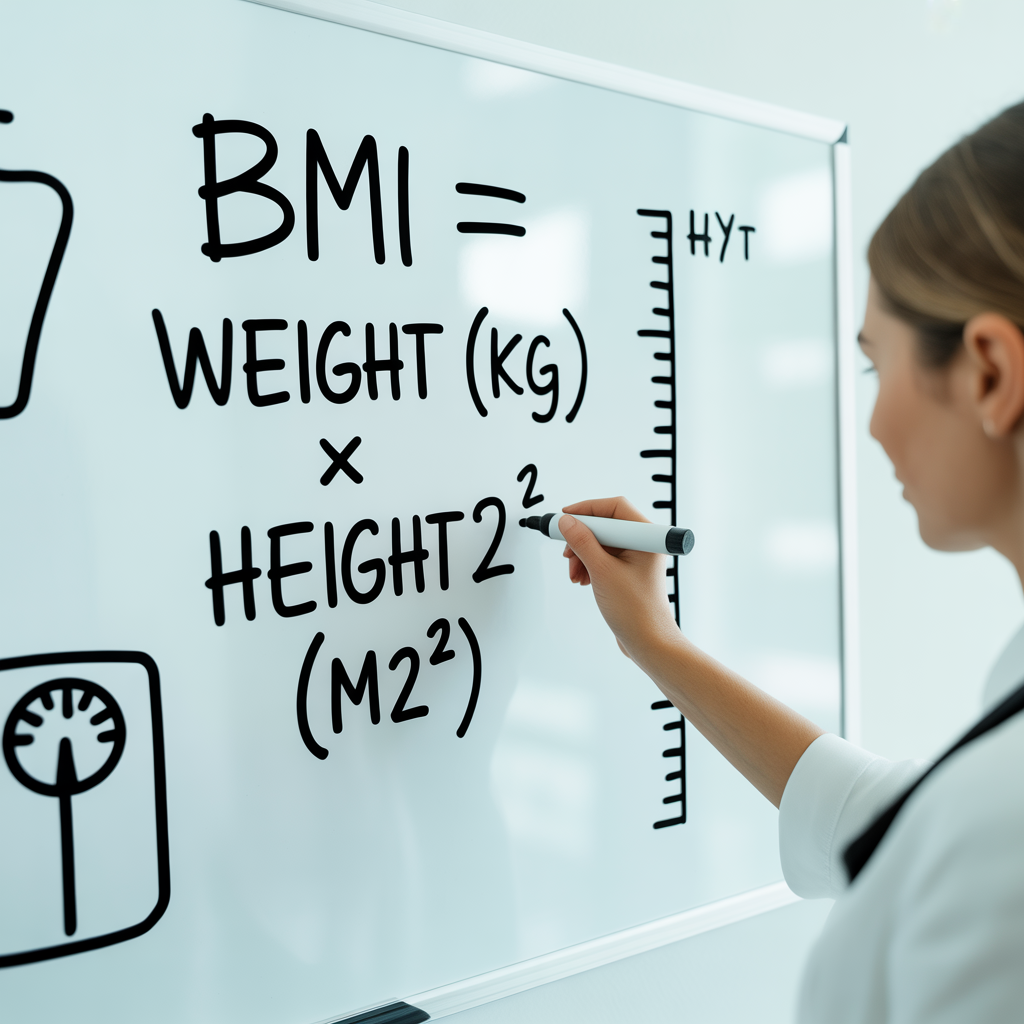
BMI is a straightforward ratio. It divides your weight by the square of your height. The result places you in one of four standard categories.
| BMI Range | Weight Category | Health Risk |
|---|---|---|
| Below 18.5 | Underweight | Moderate risk (nutritional deficiency) |
| 18.5 – 24.9 | Normal / Healthy | Low risk |
| 25.0 – 29.9 | Overweight | Increased risk |
| 30.0 and above | Obese | High risk |
These categories come directly from the World Health Organization (WHO), which has used BMI as a global health screening standard for decades.
The metric formula is: BMI = weight in kilograms ÷ (height in meters)²
The imperial formula is: BMI = 703 × weight in pounds ÷ (height in inches)²
Both formulas give the same result. A good online calculator handles the conversion automatically — no manual math needed.
How to Figure Out Your BMI — Step by Step
Using a BMI calculator is quick. Follow these five steps to get your result in under a minute.
Step 1: Gather Your Measurements
You need two things: your current weight and your height. Weigh yourself on a reliable scale. Measure your height without shoes. Small errors here affect your final number, so measure carefully.
Step 2: Choose Your Unit System
Decide whether to use metric (kg and cm) or imperial (lbs and inches). Most online BMI tools support both. Stick with what you know to avoid conversion errors.
Step 3: Enter Your Height
Type or select your height in the calculator. If you use feet and inches, enter them in the correct fields. For example, 5 feet 9 inches should be entered as two separate values, not combined as 69 inches — unless the tool asks for total inches.
Step 4: Enter Your Weight
Type your weight in pounds or kilograms. Use your most recent measurement. Avoid estimating — even a 5 lb difference can shift your BMI by a full point.
Step 5: Read and Interpret Your Result
Click calculate. You’ll see your BMI number and your weight category. Use the table above to understand what that number means for your health.
⚡ Quick Action Steps
- Weigh yourself (barefoot, morning, before eating)
- Measure your height without shoes
- Open a free online BMI calculator
- Enter your weight and height values
- Hit “Calculate” — your BMI appears instantly
- Compare your result to the standard BMI table
Practical Examples & Real-World Scenarios

Example 1: Sarah, 34 — Weight Loss Journey
Sarah weighs 165 lbs and stands 5 feet 6 inches tall. She enters her details into a BMI calculator. Her result: BMI = 26.6 — overweight. This motivates her to start a walking program and adjust her diet. Three months later, she recalculates and sees improvement.
Example 2: James, 28 — Gym Planning
James is 180 lbs and 6 feet 1 inch tall. His BMI comes out to 23.7 — solidly in the normal range. However, James wants to build muscle. He uses his BMI alongside a body fat calculator for a more complete picture of his composition.
Example 3: Linda, 52 — Annual Health Check
Linda uses the BMI calculator before a doctor’s appointment. At 140 lbs and 5 feet 4 inches, her BMI is 24.0 — healthy range. She uses this figure to track year-over-year changes and plan her daily calorie intake goals.
Example 4: Finance Parallel — Budgeting Your Health
Think of your BMI like a financial budget. Just as a loan calculator shows whether a payment is within your means, a BMI calculator shows whether your weight is within a healthy range. Both tools give you a number to act on — not a final verdict.
Common Mistakes & Misconceptions
⚠️ Warning: Avoid These BMI Errors
- Using estimated measurements. Even being off by 2 inches on height can shift your BMI significantly.
- Confusing pounds and kilograms. Always confirm which unit you’re using before entering data.
- Entering height in the wrong format. If a tool asks for total inches, don’t enter 5’9″ as “5.9” — convert to 69 inches.
- Treating BMI as a diagnosis. BMI is a screening tool, not a medical diagnosis. A doctor interprets it in context.
- Using BMI alone for athletes. High muscle mass can push BMI into the “overweight” zone even in very fit people.
- Ignoring age and gender. Standard adult BMI charts don’t apply to children or the elderly without adjustment.
Many users confuse BMI with body fat percentage. BMI uses weight — which includes muscle, bone, and water — while body fat percentage measures only fat tissue. The two metrics tell different stories.
Why Knowing Your BMI Matters
Tracking your BMI gives you a baseline for long-term health awareness. Here’s why millions of people check it regularly:
- Early risk detection — A BMI over 30 correlates with higher risk of type 2 diabetes, heart disease, and joint problems.
- Goal setting — It gives you a concrete target weight range for your height.
- Progress tracking — Calculate monthly to see the impact of your diet and exercise habits.
- Doctor communication — Physicians use BMI as a starting point for weight-related health conversations.
- Insurance and screening — Many health insurance programs and workplace wellness plans reference BMI thresholds.
- Motivation — Seeing a number move in the right direction provides real, measurable motivation to continue.
According to the Centers for Disease Control and Prevention (CDC), BMI is one of the most widely used tools to screen for weight categories that may lead to health problems in adults.
Expanded Insights: BMI vs. Other Health Metrics
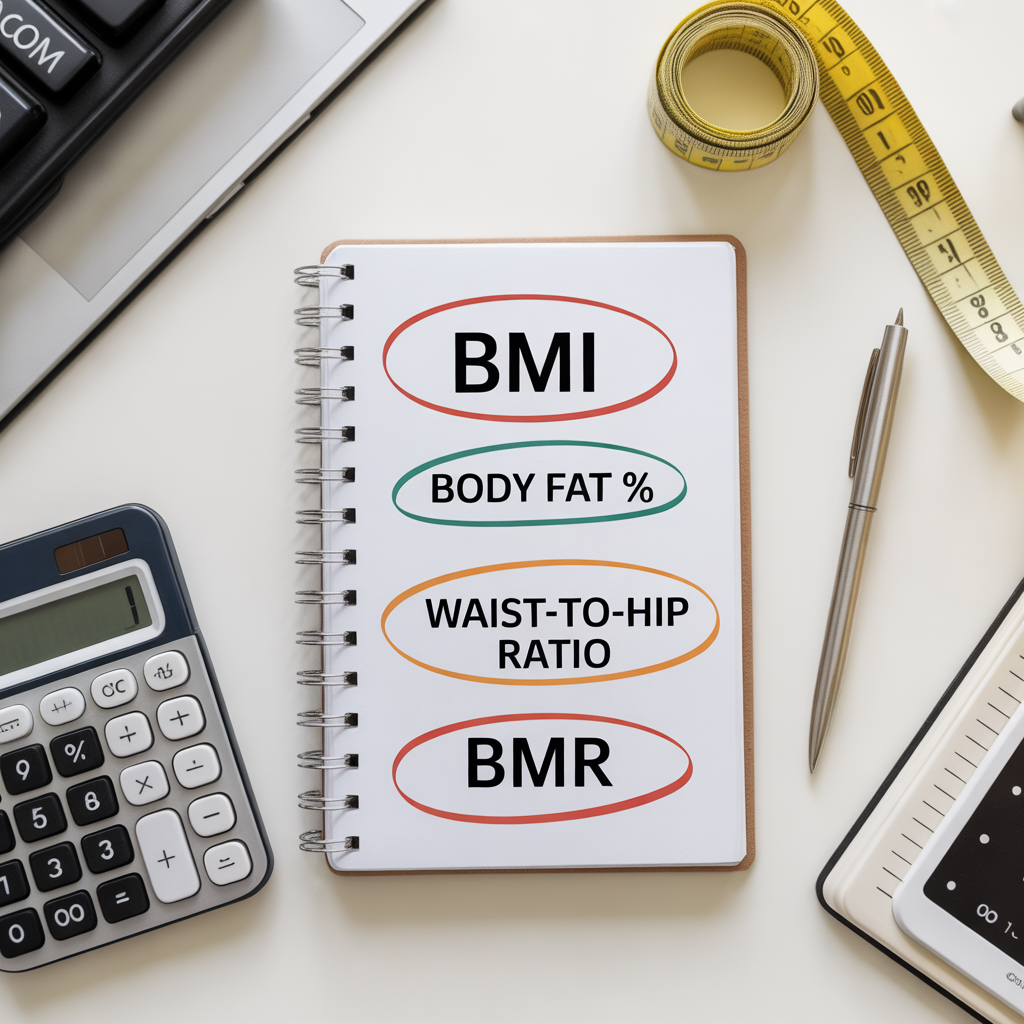
BMI is useful, but it’s one tool in a larger toolkit. Here’s how it compares to other popular metrics:
| Metric | What It Measures | Ease of Use | Best For |
|---|---|---|---|
| BMI | Weight-to-height ratio | Very easy | General screening |
| Body Fat % | Fat tissue percentage | Moderate | Fitness and athletes |
| Waist-to-Hip Ratio | Fat distribution | Easy | Cardiovascular risk |
| BMR | Calories burned at rest | Easy with tool | Diet and weight loss |
For the most complete picture, combine your BMI result with your basal metabolic rate (BMR). Your BMR tells you how many calories your body burns at rest, helping you plan meals and workouts more precisely.
💡 Pro Tip: Use Multiple Metrics Together
If your BMI is in the overweight range but your body fat percentage is normal, you may simply have a muscular build. Always use BMI alongside at least one other measurement before drawing conclusions about your health.
Tips & Warnings for Accurate Results

Follow these practical tips to get the most accurate BMI calculation every time:
- Weigh yourself in the morning — before eating or drinking, after using the bathroom. This gives the most consistent baseline.
- Measure height against a wall — stand straight, heels together, eyes forward. Ask someone else to mark and measure for accuracy.
- Recalculate regularly — monthly checks help you spot trends before small changes become larger problems.
- Use a dedicated health tool — the fitness and health calculators on AceCalculator are designed for accuracy and ease.
- Keep a log — note your BMI, weight, and date each time you calculate. Patterns over 3–6 months are more meaningful than a single reading.
- Consult a professional — if your BMI is below 17 or above 35, speak with a doctor before making major lifestyle changes.
Accuracy, Reliability & User Engagement
Online BMI calculators are highly reliable — when you enter accurate data. The formula itself is fixed and universally standardized. The only variable is the quality of your inputs.
Here’s what affects accuracy:
- Measurement precision — use calibrated scales and a rigid measuring tape or stadiometer for height.
- Time of day — body weight fluctuates by up to 5 lbs throughout the day due to food, water, and activity.
- Clothing — weigh yourself with minimal clothing for consistency.
- Pregnancy — standard BMI calculations are not designed for pregnant women.
- Athlete status — high-performance athletes may show inflated BMI due to muscle density.
Reputable tools like the BMI calculator for US users follow WHO and CDC guidelines precisely, giving you results you can trust.
When results feel inconsistent, recalibrate your measurements rather than switching tools. The formula is the same everywhere. The difference is always in the input.
Frequently Asked Questions
How do I figure out my BMI calculator result in pounds and inches?
Use the imperial formula: BMI = 703 × (weight in lbs) ÷ (height in inches)². For example, a person weighing 170 lbs at 5’8″ (68 inches) has a BMI of 703 × 170 ÷ (68²) = 25.8. An online calculator does this math for you instantly.
What is a healthy BMI for adults?
A BMI between 18.5 and 24.9 is considered healthy for most adults. Anything below 18.5 is underweight, 25–29.9 is overweight, and 30 or above is classified as obese.
Is BMI accurate for everyone?
Not for everyone. BMI is a general screening tool and works well for the average adult. It is less accurate for athletes (high muscle mass), elderly individuals (muscle loss), and pregnant women. Use additional metrics like body fat percentage for a more complete picture.
Can children use the same BMI calculator as adults?
No. Children and teens need age- and sex-specific BMI charts, sometimes called “BMI-for-age.” Standard adult calculators are not suitable. Always use a pediatric BMI tool for anyone under 18.
How often should I check my BMI?
For most healthy adults, checking your BMI once a month is enough to track trends. If you are actively trying to lose or gain weight, checking every two weeks can help you monitor progress more closely.
Does BMI differ by race or ethnicity?
Yes, to some extent. Studies suggest that South Asian and East Asian populations may face increased health risks at lower BMI thresholds. Some health organizations recommend adjusted cutoffs for these groups. Speak to your doctor for personalized guidance.
What’s the difference between BMI and BMR?
BMI measures your weight relative to height to screen for healthy weight ranges. BMR (Basal Metabolic Rate) measures how many calories your body burns at rest. They serve different purposes — BMI for weight screening, BMR for nutrition and energy planning.
Can a high BMI be normal for muscular people?
Yes. Muscle weighs more than fat. A bodybuilder or elite athlete may have a BMI of 27–30 while carrying very little body fat. For these individuals, a body fat percentage measurement is a far more meaningful indicator of health than BMI alone.
Conclusion

Figuring out your BMI doesn’t have to be complicated. With two measurements and a reliable calculator, you get a meaningful health data point in seconds.
Your BMI won’t tell the whole story — no single number can. But it gives you a clear, evidence-backed starting point. Use it alongside tools like a BMR calculator and a calorie tracker to build a fuller picture of your health.
Whether you’re starting a weight loss journey, preparing for a doctor’s visit, or simply curious, knowing how to figure out your BMI puts you one step ahead. Take action today — it costs nothing and takes less than a minute.
Use the Free Online Calculator NowThis article is for informational purposes only and does not constitute medical advice. Always consult a qualified healthcare professional for personalized health guidance.