

By Amanda Reeds, Content Researcher ·
Quick Summary
- Key Takeaway: The perimeter of a rectangle equals 2 × (length + width), and mixing up units is the most common source of wrong answers.
- Who This Is For: Students working through geometry homework and homeowners measuring fencing, trim, or flooring.
- Why It Matters: Getting perimeter and area confused can lead to ordering the wrong amount of fencing, edging, or flooring material.
- Reading Time: ~9 minutes
Why Getting the Perimeter of a Rectangle Right Is Worth a Few Extra Minutes
You measured two sides of a room and plugged in the numbers. The total still didn’t match what the tape measure told you when you walked the full edge. That gap usually comes down to one of two things: mixed-up units or a formula applied halfway.
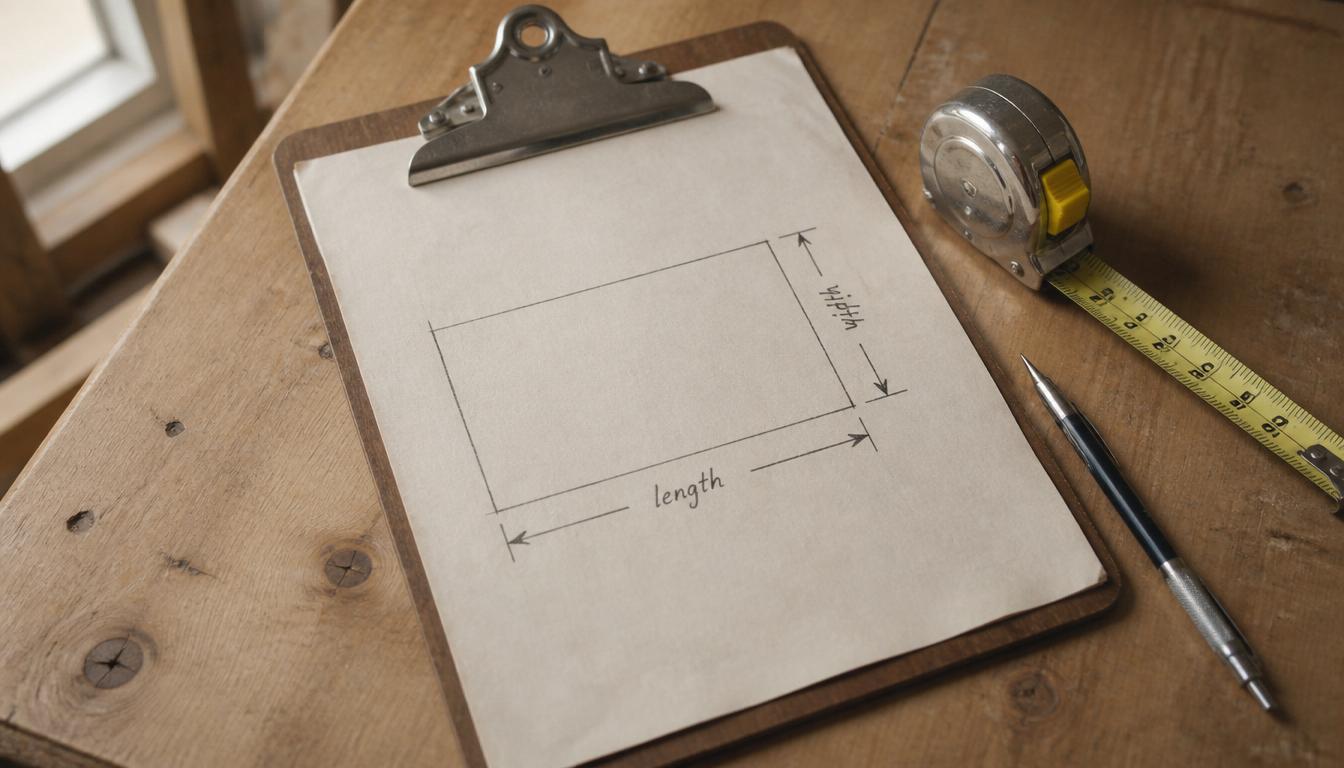
The perimeter of a rectangle is the total distance around its four sides. You find it by adding the length and width together, then multiplying that sum by two. Because a rectangle has two pairs of equal sides, the formula P = 2(l + w) works for any rectangle, whether you are measuring a room, a fence line, or a sheet of paper.
A rectangle is a four-sided shape where opposite sides are equal in length. Every corner forms a 90-degree angle. Rooms, yards, picture frames, phone screens, and garden beds are all rectangles, which is why this one formula gets used constantly.
Calculate My Space in Under 60 Seconds →Table of Contents
What Perimeter Actually Means
Perimeter is the total length of the boundary line that wraps around a shape. For a rectangle, that boundary is made of two long sides and two short sides. Since opposite sides match, you only need to measure two of them.
When I measured a rectangular patio that ran 12 feet by 8.5 feet, the formula returned a perimeter of 41 feet. That number matched a retaining wall estimate I had gotten separately from a contractor. A cross-check like that is a good habit: if your calculated perimeter looks wildly different from a rough physical measurement, a unit got mixed up somewhere.
According to the National Center for Education Statistics, the average NAEP mathematics score for U.S. fourth-graders rose 2 points in 2024 compared with 2022. It still stayed 3 points below the pre-pandemic 2019 level, and measurement and geometry are among the five content areas the assessment tracks separately. Shape-based problems like this one show up on standardized tests year after year. The underlying skill rarely changes even as the scores shift.
Perimeter uses linear units, meaning feet, inches, meters, or yards, never square units. If your answer comes out in “square” anything, you have accidentally calculated area instead.
How to Find the Perimeter of a Rectangle, Step by Step
Whether you’d rather figure out the perimeter by hand or just get the perimeter number quickly for a shopping list, the full process takes four steps. All four rely on keeping your units consistent from start to finish.
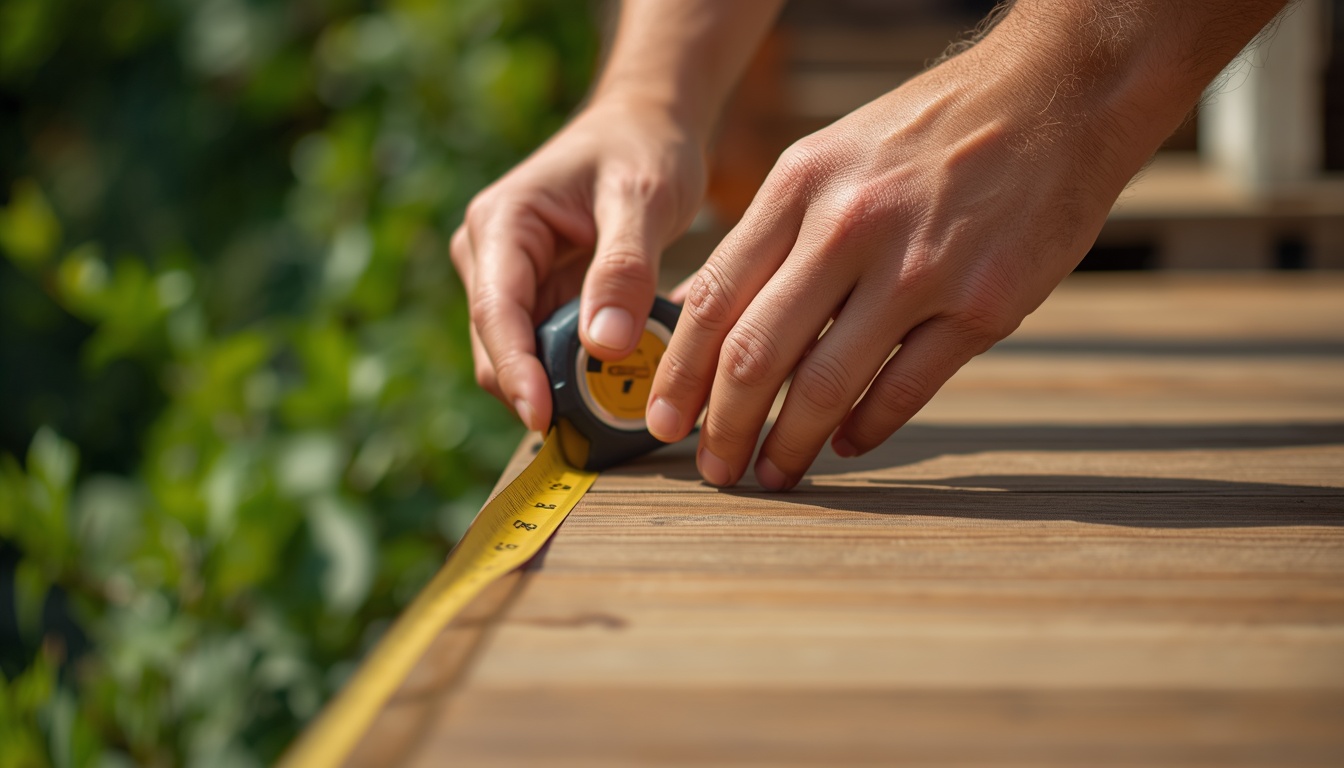
- Measure the length. Record the longer side of the rectangle in a single unit, such as feet or inches.
- Measure the width. Record the shorter side using that exact same unit.
-
Add the two numbers together.
Why Addition Comes First
Adding length and width before doubling reflects the actual shape: one long side plus one short side equals half the total boundary. Skipping straight to multiplication is where a lot of the confusion with area formulas starts.
- Multiply the sum by two. This accounts for the second long side and second short side that mirror the first two.
Here is the formula applied to real numbers. Say your monthly rent budget led you to a rectangular apartment measuring 22 feet by 14 feet. The perimeter would be 2 × (22 + 14), which comes out to 72 feet. According to NIST Handbook 44, one foot equals exactly 12 inches and one square foot equals exactly 144 square inches. That is the reference conversion the U.S. trade and measurement system relies on, so any mid-calculation conversion should use that exact ratio rather than a rounded estimate.
Quick Action Steps
- Measure the length in one consistent unit.
- Measure the width in that same unit.
- Add the length and width together.
- Multiply the sum by two to get your perimeter.
How to Find the Area of a Rectangle (And Why It’s a Different Number)
If you need to find out the area of a rectangle or simply work out the area for a materials estimate, the process uses the same two measurements as perimeter, just combined differently. The area of a rectangle is the amount of surface enclosed inside its four sides. You find it by multiplying length by width: A = l × w. Using the same 22-by-14-foot apartment from the last section, the area would be 22 × 14, or 308 square feet. That’s a completely different number from the 72-foot perimeter calculated above.
Here’s the part that trips up a lot of people: area and perimeter use completely different units. Mixing them up is an easy way to end up ordering double the paint or half the fencing you actually need. Perimeter is measured in a straight-line unit like feet. Area is measured in a squared unit like square feet, because it describes a flat surface rather than a single edge.
If you already know the area and one side, you can work backward. Divide the area by the known side to find the missing side, then use that result to find the perimeter. This reverse approach comes up often in homework problems where only partial information is given.
Real Numbers: Two Examples Worth Walking Through
Maria, a homeowner in Columbus, Ohio, wanted to fence in her rectangular backyard before adding a swing set. She measured the yard at 40 feet long and 25 feet wide. Using P = 2(l + w), she calculated 2 × (40 + 25), which equals 130 feet of fencing. The contractor’s estimate came in at 132 feet to account for a gate overlap. Her own math had landed close enough to negotiate the quote with confidence.
Derek, a seventh grader in Austin, Texas, was stuck on a homework problem. His rectangular garden bed measured 9 feet by 14 feet. He plugged the numbers into 2 × (9 + 14) and got 46 feet of edging material. His teacher’s answer key confirmed it. The area, 126 square feet, told him separately how many bags of soil he would need.
Common Mistakes People Make With Perimeter and Area
Most errors come from a small handful of repeatable habits rather than a misunderstanding of the shape itself.
Confusing perimeter with area. Both formulas use the same two numbers, so it’s easy to multiply when you meant to add and double, or the reverse. Checking whether your answer should be in linear or square units catches this every time.
Forgetting to double the sum. Adding length and width gives you half the perimeter, not the whole thing. Leaving out the final multiplication by two is one of the most frequent errors on geometry worksheets.
Mixing feet and inches in the same calculation. A rectangle listed as 6 feet by 30 inches needs both numbers converted to one unit first. Skipping that step produces a number that looks reasonable but is wrong.
Treating an irregular floor plan as a perfect rectangle. Rooms with a closet nook or a bump-out are not true rectangles. Applying the formula directly will overstate or understate the real perimeter. Breaking the space into smaller rectangles first, then adding the pieces, gives a more accurate total.
⚠ Watch Out For This
Perimeter and area are not interchangeable. Using the wrong one when ordering fencing, trim, or flooring can leave you with double the material you need, or half.
Why This Skill Actually Comes in Handy
Knowing how to find a rectangle’s perimeter without reaching for a calculator saves real time. It matters most on projects that involve buying materials by length rather than by square footage.
- Fencing, trim, baseboard, and edging are all priced and sold by linear foot. An accurate perimeter keeps you from over-ordering or making a second hardware store trip. According to the U.S. Census Bureau, the median size of a new single-family home sold in 2024 was 2,210 square feet, a figure that only becomes useful once you translate it back into actual side lengths.
- Standardized math tests continue to weight geometry and measurement heavily. Students who are comfortable with perimeter tend to move through related area, volume, and scale problems faster.
- DIY framing, gardening, and even wrapping a rectangular gift rely on the same two-step formula. Learning it once covers a surprisingly wide range of everyday tasks.
Perimeter vs. Area: What’s the Difference?
Real-world measuring introduces its own small errors. A slightly bowed wall or a stretched tape measure can shift your number by an inch or two. That’s fine for most home projects, even though a math worksheet expects an exact answer. The table below lines up the two concepts side by side, using a single 12-by-8 rectangle as the shared example.
| Factor | Perimeter | Area |
|---|---|---|
| Definition | Distance around the outer edge | Space enclosed inside the shape |
| Formula | P = 2(l + w) | A = l × w |
| Unit type | Linear (ft, m, in) | Square (sq ft, sq m) |
| Common use | Fencing, trim, framing, edging | Flooring, paint, carpet, sod |
| 12 ft × 8 ft example | 40 ft | 96 sq ft |
💡 Pro Tip
Convert every measurement to the same unit before you calculate anything. Mixing metric and imperial numbers? Run them through a square meter to square feet conversion first, or use a general unit conversion tool before you touch the formula.
Some projects move beyond flat shapes into three dimensions, like figuring out how much material fills a raised garden bed. The same length-times-width logic extends into a volume calculation once you add a height measurement.
Frequently Asked Questions About the Perimeter of a Rectangle
How do you find out the perimeter of a rectangle if you only know the area?
Divide the known area by one known side length to find the missing side. Then apply the standard perimeter formula. A rectangle with an area of 96 square feet and a known length of 12 feet has a width of 8 feet, so the perimeter is 2 × (12 + 8), or 40 feet. This method only works when you already know at least one full side.
What is the formula for the area of a rectangle?
The area formula is A = length × width, always expressed in square units. A rectangle measuring 10 feet by 6 feet has an area of 60 square feet. Area measures the enclosed surface, which is a different quantity from perimeter, the distance around the outside.
How do you find the perimeter of a rectangle in feet and inches?
Convert every measurement to one unit first, since 1 foot equals exactly 12 inches according to NIST Handbook 44. Then add the length and width and multiply the total by two. Skipping the conversion step is the most common reason home measuring projects come out wrong.
Can two rectangles have the same perimeter but different areas?
Yes. A 10-by-2 rectangle and a 6-by-6 square both have a perimeter of 24 units. Their areas, though, are 20 and 36 square units. Perimeter only describes the outer boundary, so shapes sharing that boundary length can enclose very different amounts of space.
How do you measure the perimeter of a rectangle without doing math?
You can physically run a tape measure or string around all four sides and read the total length directly. This works fine for real objects like a room or garden bed. It takes longer, though, and carries more room for small errors than measuring two sides and applying the formula.
Is perimeter the same as area?
No. Perimeter is the total distance around a shape’s outer edge, expressed in linear units such as feet or meters. Area is the amount of surface enclosed inside that shape, expressed in square units such as square feet or square meters.
How do you work out the perimeter of a square compared to a rectangle?
A square uses P = 4s because all four sides are equal. A rectangle uses P = 2(l + w) because opposite sides match in pairs rather than all four matching. A square is technically a rectangle where the length and width happen to be identical.
What units do you use for area versus perimeter?
Perimeter is always expressed in linear units such as feet, inches, or meters, since it measures a single line around a shape. Area is expressed in square units such as square feet or square meters, since it measures a flat, two-dimensional space instead.
How do you find out the perimeter of a rectangle from a floor plan?
Read the length and width labeled on the plan, confirm they share the same unit, then apply P = 2(l + w). Floor plans often list dimensions like 12’6″, combining feet and inches, so convert that to a single decimal unit before calculating.
Content Researcher · AceCalculator
Amanda Reeds researches and writes AceCalculator’s math and measurement guides. She translates formulas from state math standards into step-by-step walkthroughs. She has covered geometry, unit conversion, and home-measurement topics for the site since 2025, drawing on NIST and NCES reference data to keep every formula verifiable.
The Bottom Line on Finding a Rectangle’s Perimeter
Finding the perimeter of a rectangle comes down to one formula: add the length and width, then double the result. Finding the area comes down to a second formula that uses the same two numbers differently: multiply them together. Where people actually get stuck is rarely the math itself. It’s forgetting to keep every measurement in the same unit before doing the arithmetic.
What this formula does not do is account for real-world irregularities. A wall that bows slightly, a garden bed with a rounded corner, or a floor plan with a bump-out are not perfect rectangles. Treating them as one will introduce error. For shapes like that, break the space into smaller rectangles, calculate each piece, and add the results together.
Try More Free Math Tools →
Still solving multi-step geometry or algebra homework? AceCalculator’s math solver guide walks through step-by-step problem solving beyond a single formula.